„Seeing is forgetting the name of the thing one sees.“ – Robert Irwin
„Seeing is forgetting the name of the thing one sees.“ Robert Irwin spent a lifetime turning this idea into art, stripping away language to make us truly perceive. In this episode, we ask why, in a world of constant naming, that might be the most radical act of all. Prepare to see differently.
 Available on Apple Podcasts & everywhere else — or right here ↓
Transkript Robert Irwin
CD: Someone who prefers to remain unseen makes Art unquoted possible. Their generosity is the invisible foundation of everything you hear. We dedicate this episode with deep gratitude.
EB: Now we have a look on American artist Robert Irwin whose entire practice was devoted to a single, obsessive question: How do we actually see? He moved from painting to sculpture to light installations to site-specific works, always asking the same thing. Relentlessly. He gave his entire life to understanding perception. He passed away in 2023 at the age of 99.
CD: And he left us with a very elegant statements about art and vision: „Seeing is forgetting the name of the thing one sees.“
EB: Beautiful.
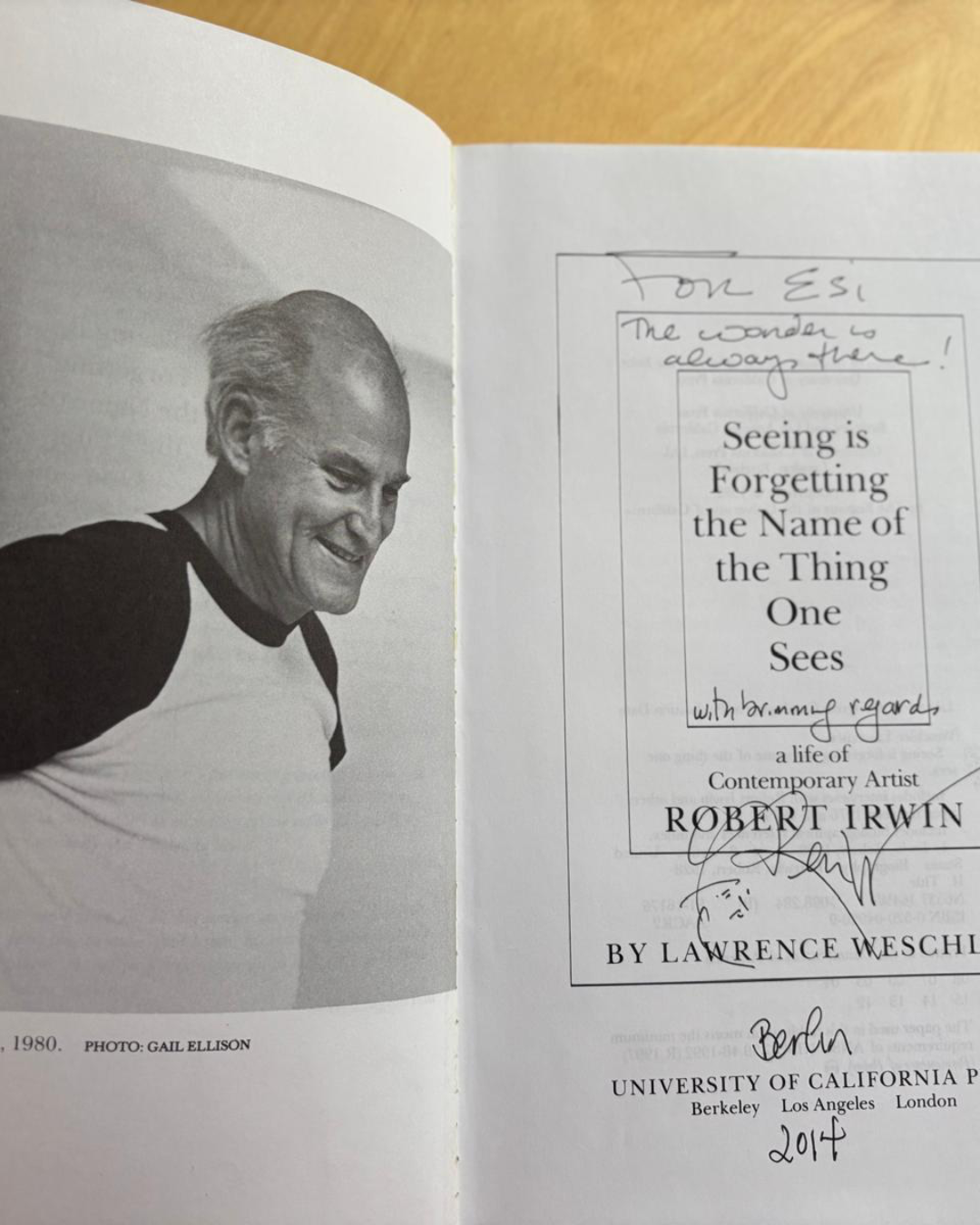
CD: It is. Although the quote doesn’t originate with Irwin. It stems originally from Paul Valéry, the French poet and philosopher, who lived from 1871 to 1945. But Irwin made it his own. It became so central to his thinking, so woven into his practice, that it’s now inseparable from his name. The book about him written by Lawrence Weschler in 1982 uses it as a title. And the book is really about Irwin’s artistic philosophy and his obsession with pure perception, with visual experience stripped of language, of naming, of all the cognitive baggage we carry into a room.
EB: So it’s not that Irwin coined the term. He inhabited it and lived it.
CD: Yes. But I want to push back slightly on your framing. You said he was „devoted to understanding perception.“ I’d say he was devoted to disrupting it. There’s a difference. Understanding suggests clarity, resolution. Irwin wasn’t interested in that. He wanted to make you uncomfortable. He wanted to strip away your assumptions about what you’re looking at.
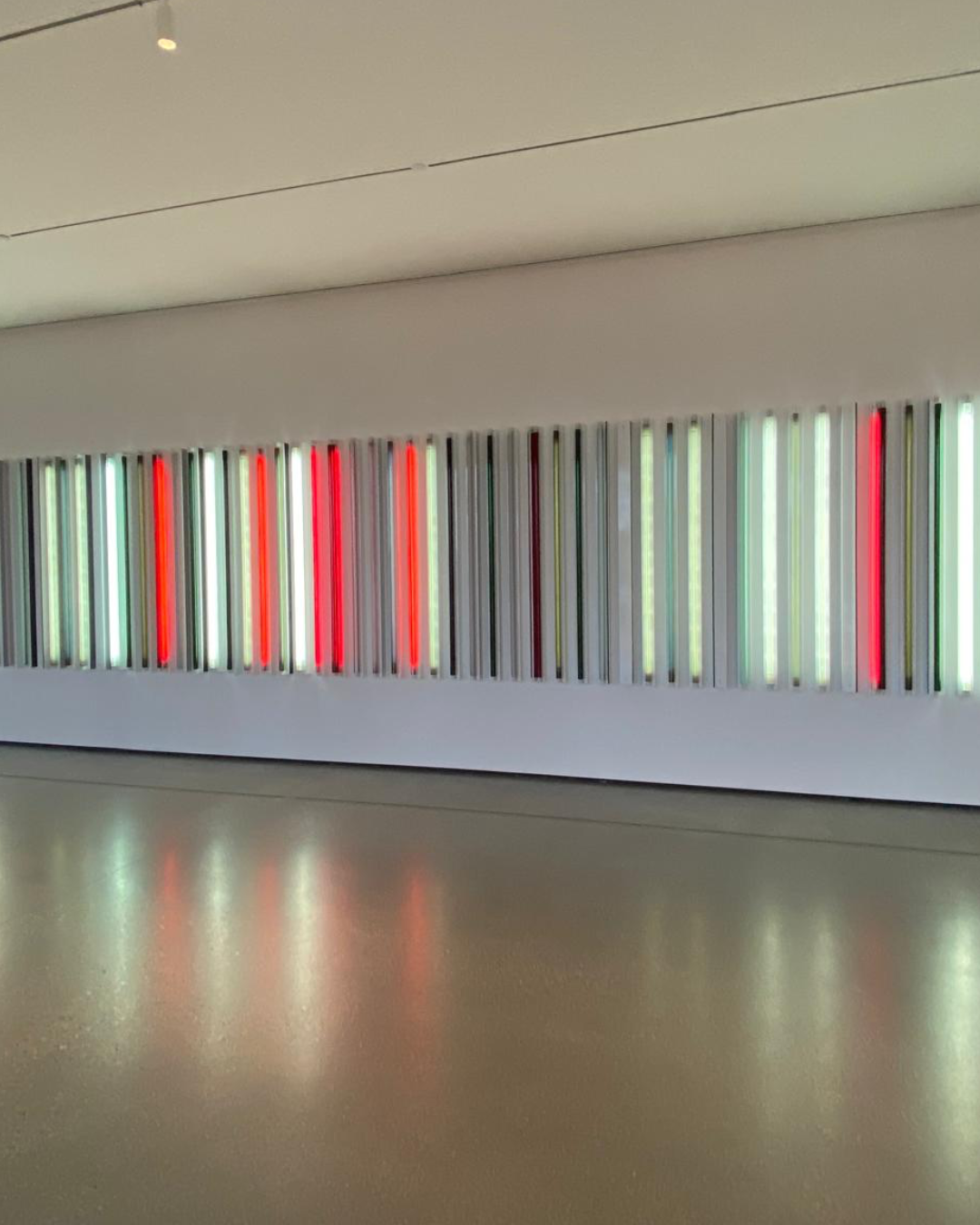
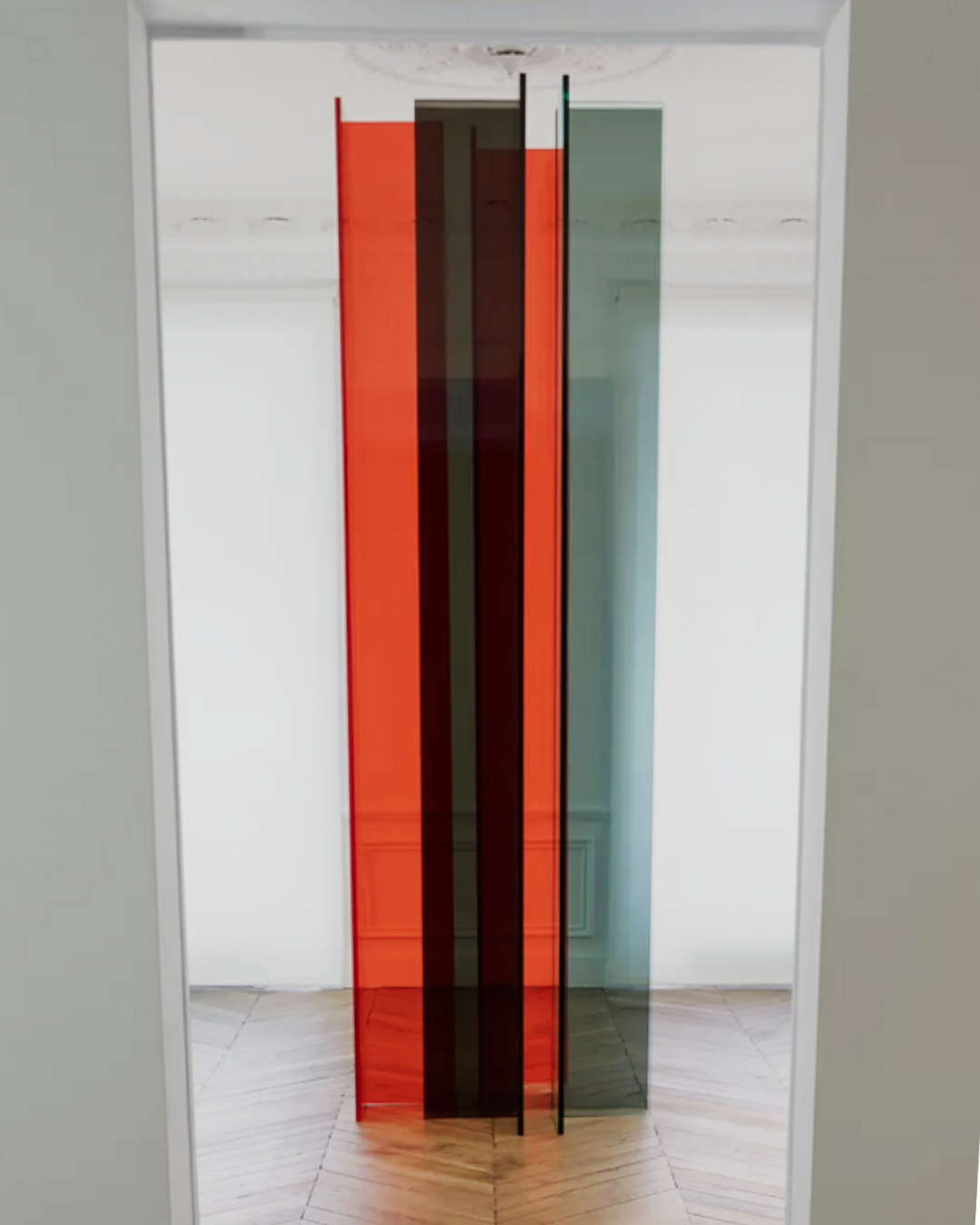
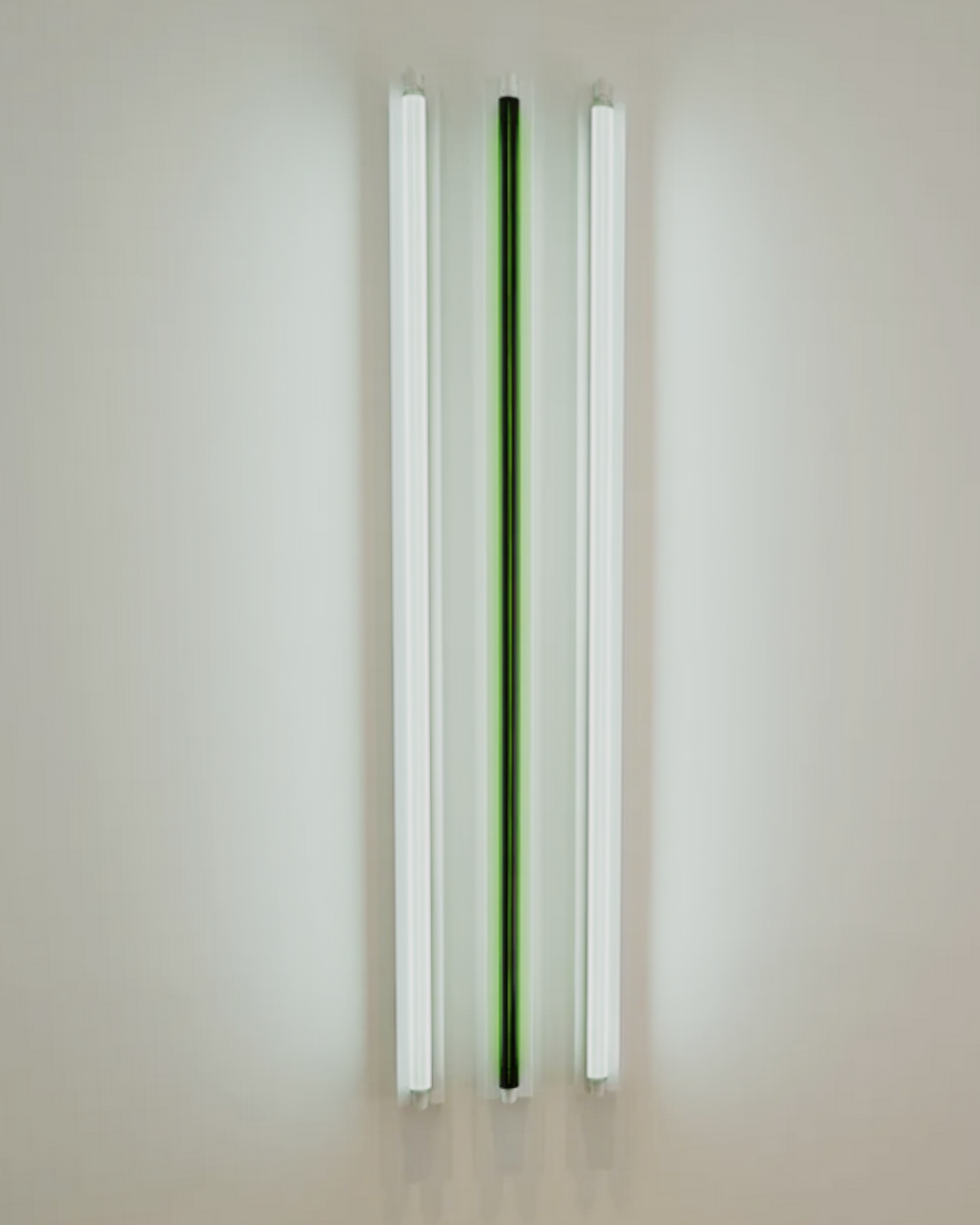
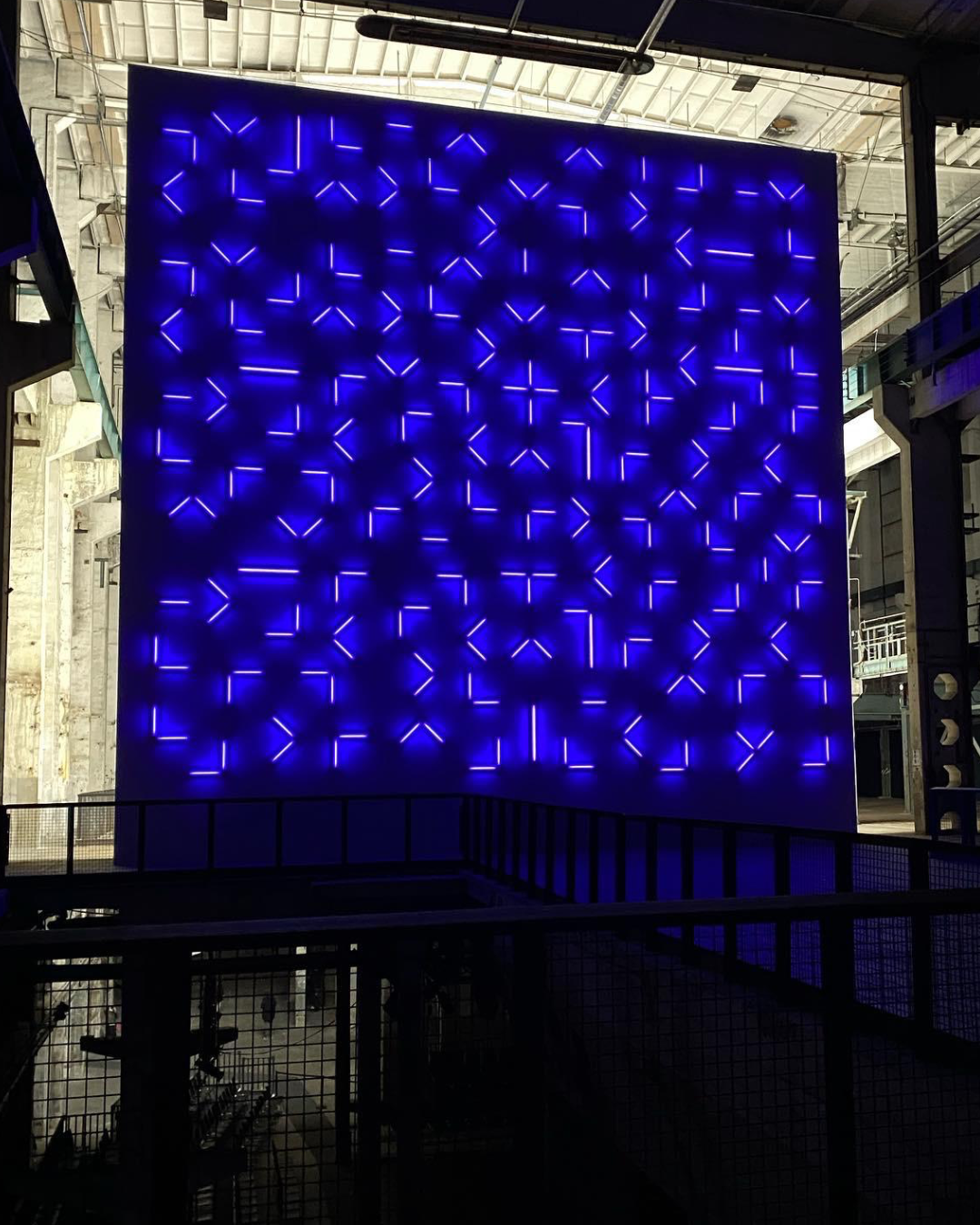
EB: But at the same time there’s something generous in that disruption. When you stand in front of one of his installations, let’s say, the scrim installations, or the light works, there’s this moment where you realize you’ve been seeing the whole time, but you haven’t been aware that you’re seeing. He’s making you conscious of the act itself. That’s not aggressive; that’s intimate.
CD: Intimate is a good word. But it’s also confrontational. Because once you’re aware of the act of seeing, you can’t unsee it. You can’t go back to passive looking. In a way, he’s changed you.
EB: The Valéry quote is implying something almost paradoxical: once you name something, you stop really seeing it. You’ve categorized it, filed it away. But if you can forget the name, if you can return to that state of pure, unnamed perception, then you’re actually seeing for the first time.
CD: Which is almost impossible, isn’t it? We’re linguistic creatures. We can’t help but name things. It’s how we make sense of the world.
EB: No, we can’t help it. But Irwin believed we could try and practice it. Through his work, through the experience of his installations, he was offering a kind of training in forgetting. In unlearning.
CD: And here’s where people might ask: is that actually possible? Or is Irwin and Valéry offering us a beautiful myth? Because the moment you’re aware that you’re trying to forget the name, you’ve already named the act of forgetting. You’re caught in a loop.
EB: Maybe. But I think the point isn’t to actually achieve it. The point is the attempt. The reaching toward something beyond language. And in that reaching, something shifts.
CD: For sure, you become more attentive. More present and you are perceiving something beyond language. This is why I think Irwin was such a profound artist. When I look at art, this is what I am searching for. But you also sound like you’ve experienced this firsthand.
EB: I have. Standing in front of his work, yes. But also, and this is strange to say, through a conversation I had years ago with Lawrence Weschler, the author of the book about Irwin. He talked about following Irwin around, documenting his process, and realizing that Irwin wasn’t trying to create objects. He was trying to create experiences. Moments of heightened perception. And Weschler understood that the book itself couldn’t capture that, only gesture at it.
CD: The creation of experience became such an important aspect of contemporary art. Irwin understood that decades earlier. So you met Lawrence Weschler, who wrote the definitive book on Irwin?
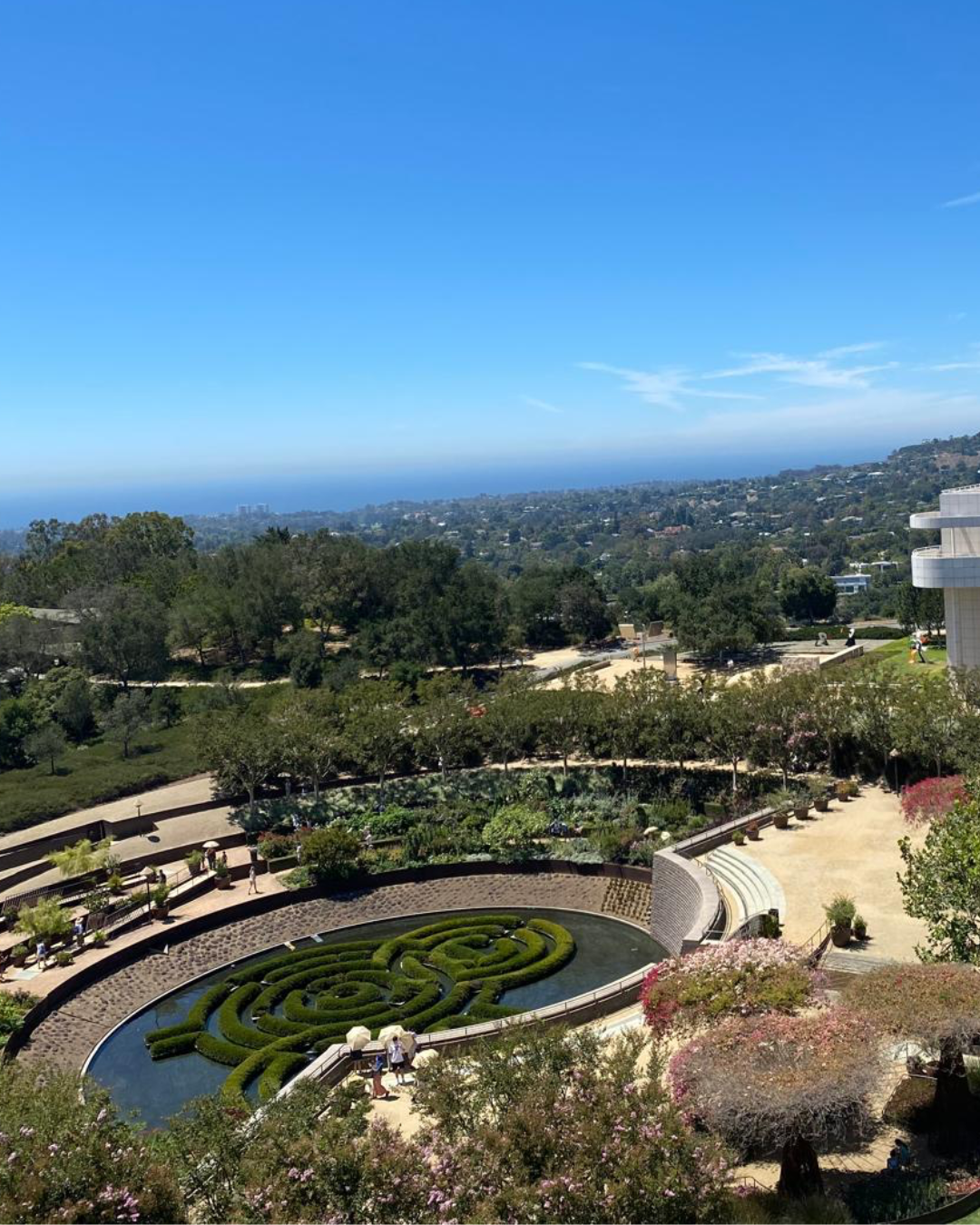
EB: I did. Years ago in Berlin. I met him through my work at the Getty Center in Los Angeles, where Irwin famously designed the garden. Weschler was so aware about the limitations of his own project. He knew that writing about Irwin’s work was, in a way, a betrayal of what Irwin was trying to do. Especially since for years, Irwin did not let his installations be documented at all until he abandoned his Venice beach studio in 1970.
CD: Because the moment you describe the experience in words, you’ve already lost it, right? Quite remarkable. So Weschler was aware of the paradox, that he was using language to describe something that wants to overcome language.
EB: Yes, of course! And I think that’s what makes his book so good.
CD: I absolutely agree. It’s not trying to explain Irwin. It’s trying to evoke him. It’s quite impressionistic, personal, full of anecdotes and digressions. It’s like a conversation – with a certain resemblance to what we do here.
EB: Trying to talk about something that resists talking about?
CD: Are we succeeding or are we failing beautifully?
EB: Hopefully both.
CD: So here’s my final thought. Irwin spent ninety-five years asking: how do we see? And his answer was: we don’t. Not really. Not until we forget to name what we’re looking at. Not until we let go of language and just be in the presence of something. Is that natural, radical or spiritual?
EB: All of it. And I think that’s why his work is timeless. Because in a world of constant naming, constant categorizing, constant digital mediation, we’re all hungry for that experience of really seeing.
CD: To forget the names of the things we see. What a relief.
EB: Yes. To forget the names of the things we see.
CD: And that’s exactly what we’re trying to do here, in this podcast. We’re using words, quotes, to point toward something that exists beyond words.
EB: I think while doing so, something happens. Understanding shifts. Perception deepens.
CD: And isn’t that already something?
____
Source quote: Weschler, Lawrence. Seeing Is Forgetting the Name of the Thing One Sees: Over Thirty Years of Conversations with Robert Irwin. Berkeley: University of California Press, 2006.
____
Voice: Esenija Bannan & Charlotte Desaga.
Text: Charlotte Desaga.
Images from our private archives.