„Materials form a language.“ – Francis Offman
„Materials form a language.“ But Adorno reminds us: there’s no such thing as innocent material. Every coffee ground, every scrap of paper carries meaning. In this episode, we explore how artist Francis Offman uses found materials to speak what can’t be represented.
 Available on Apple Podcasts & everywhere else — or right here ↓
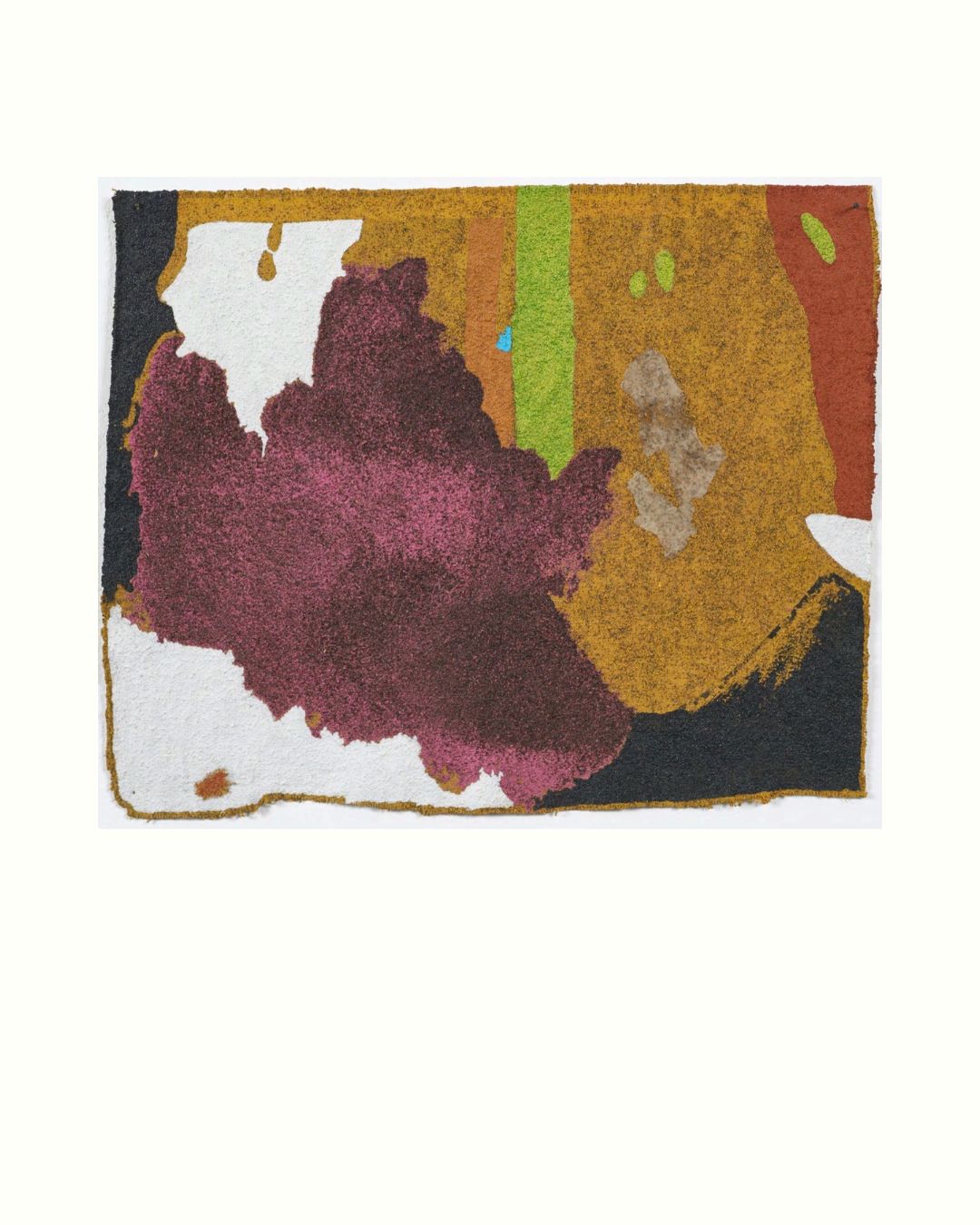
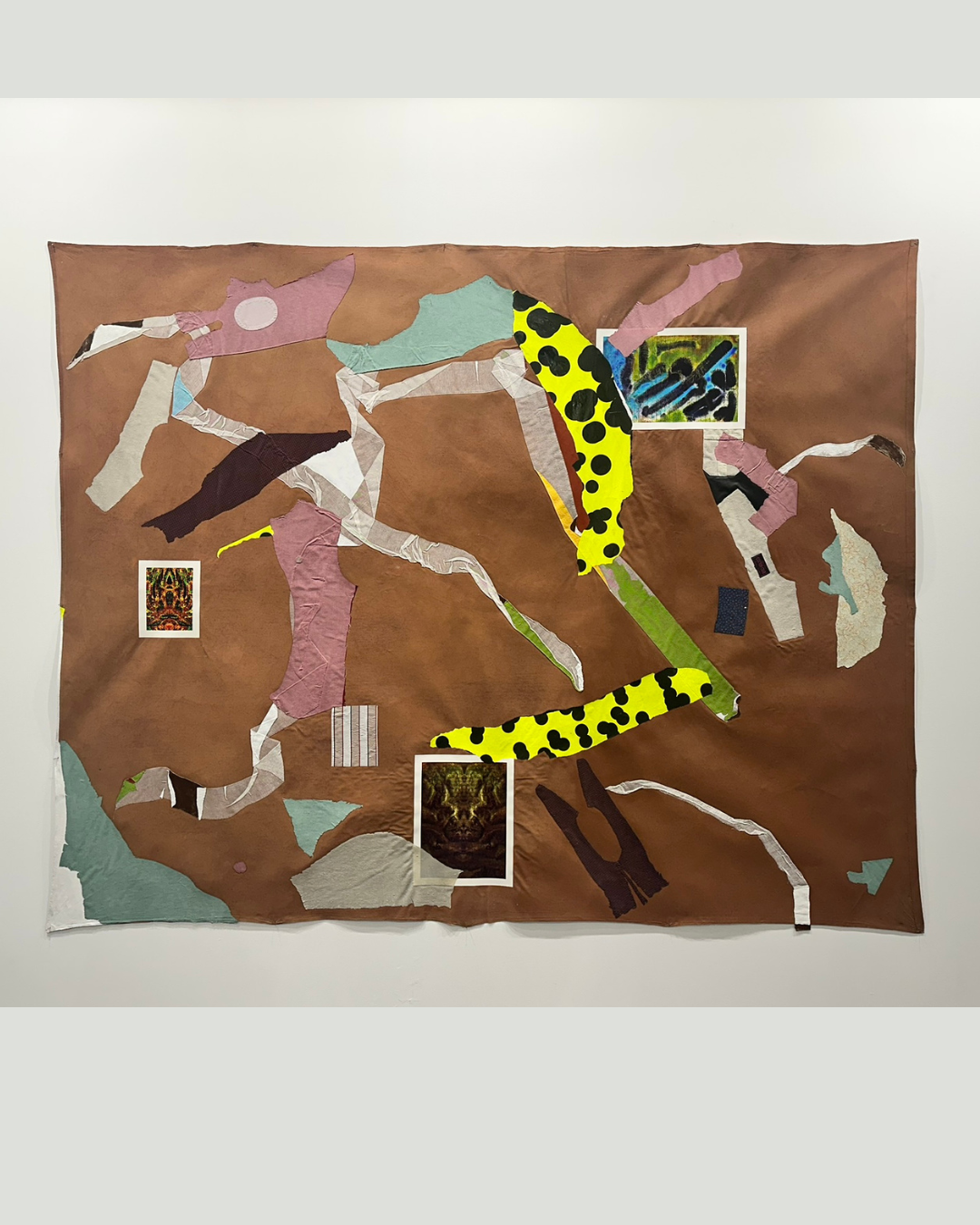
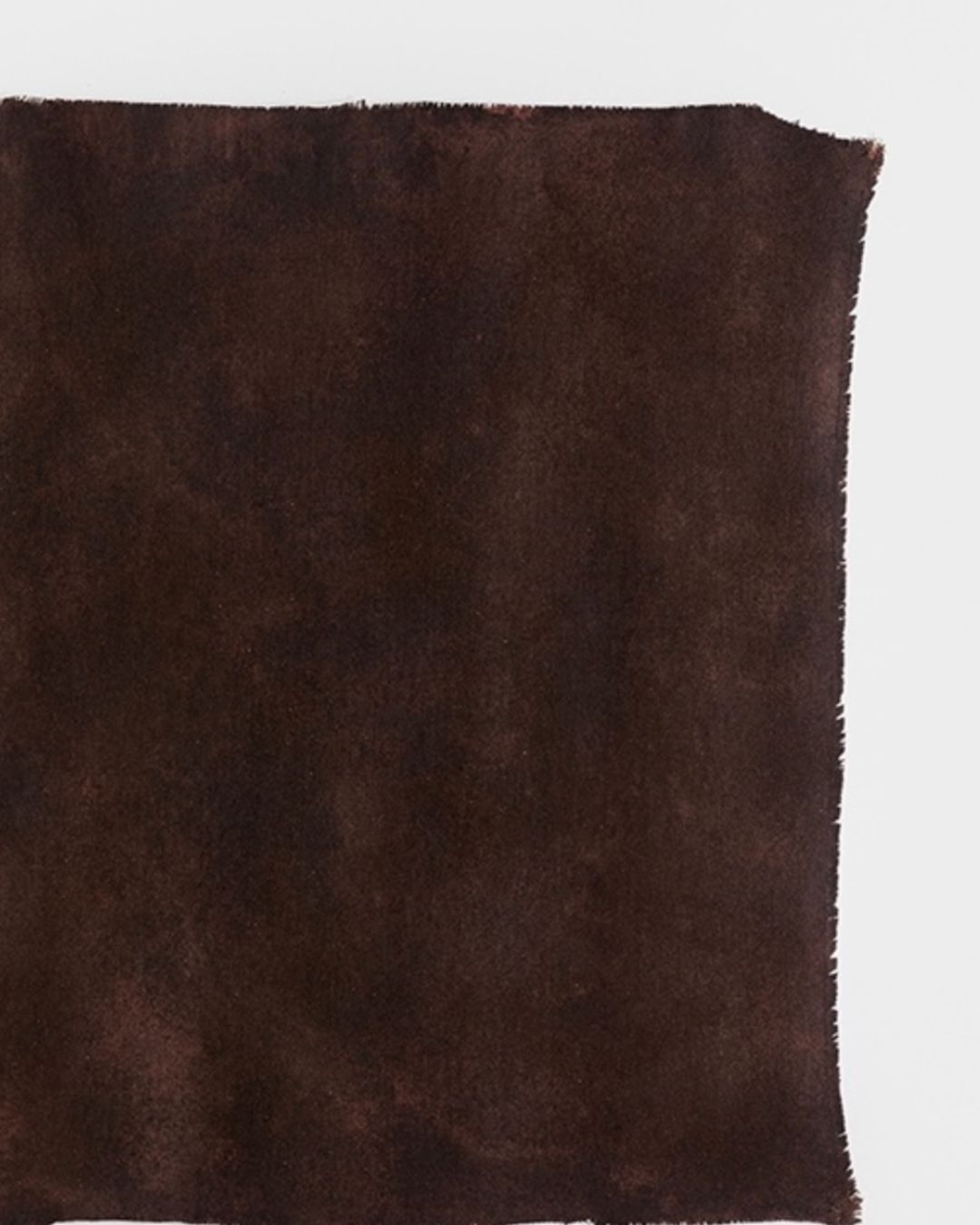
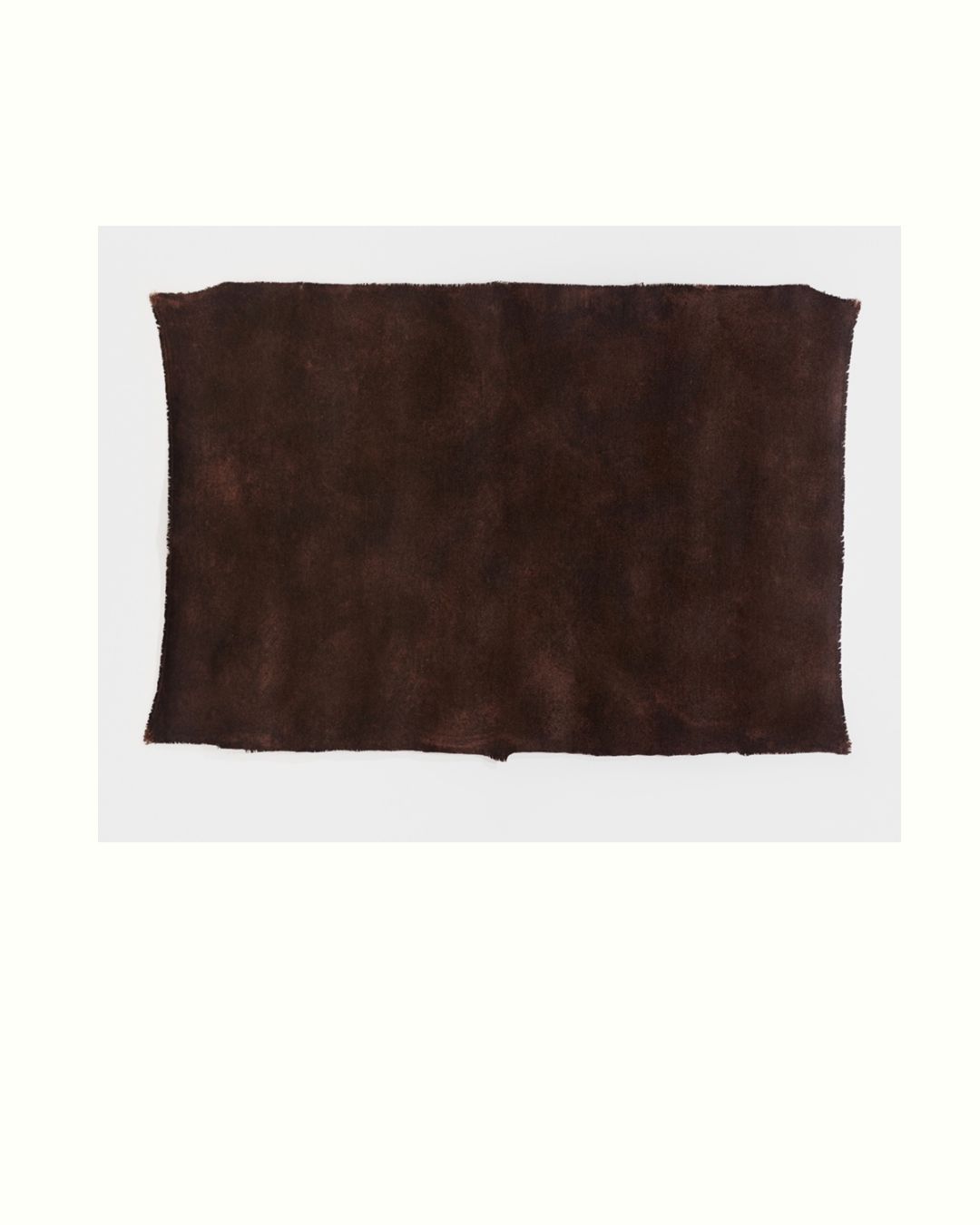
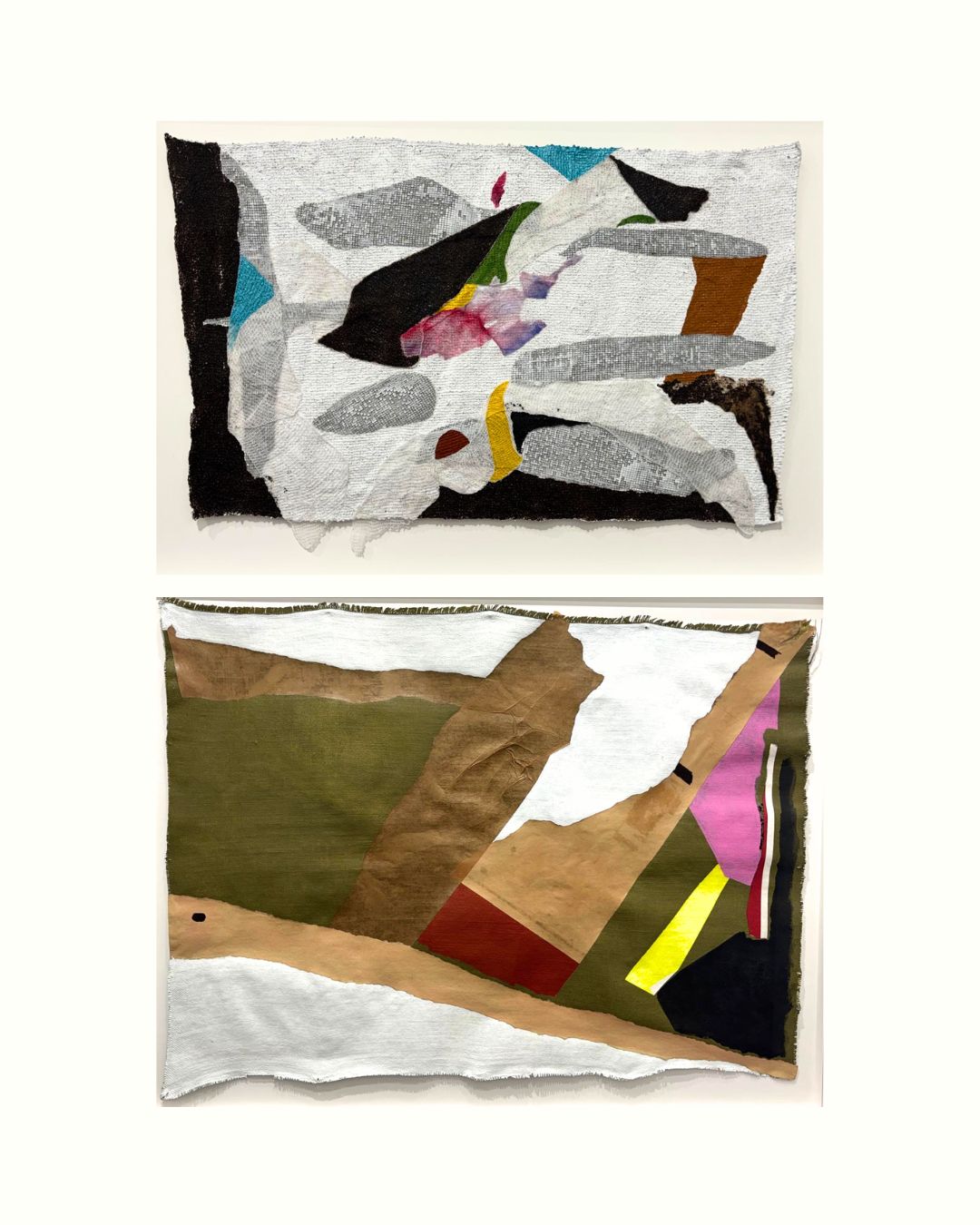
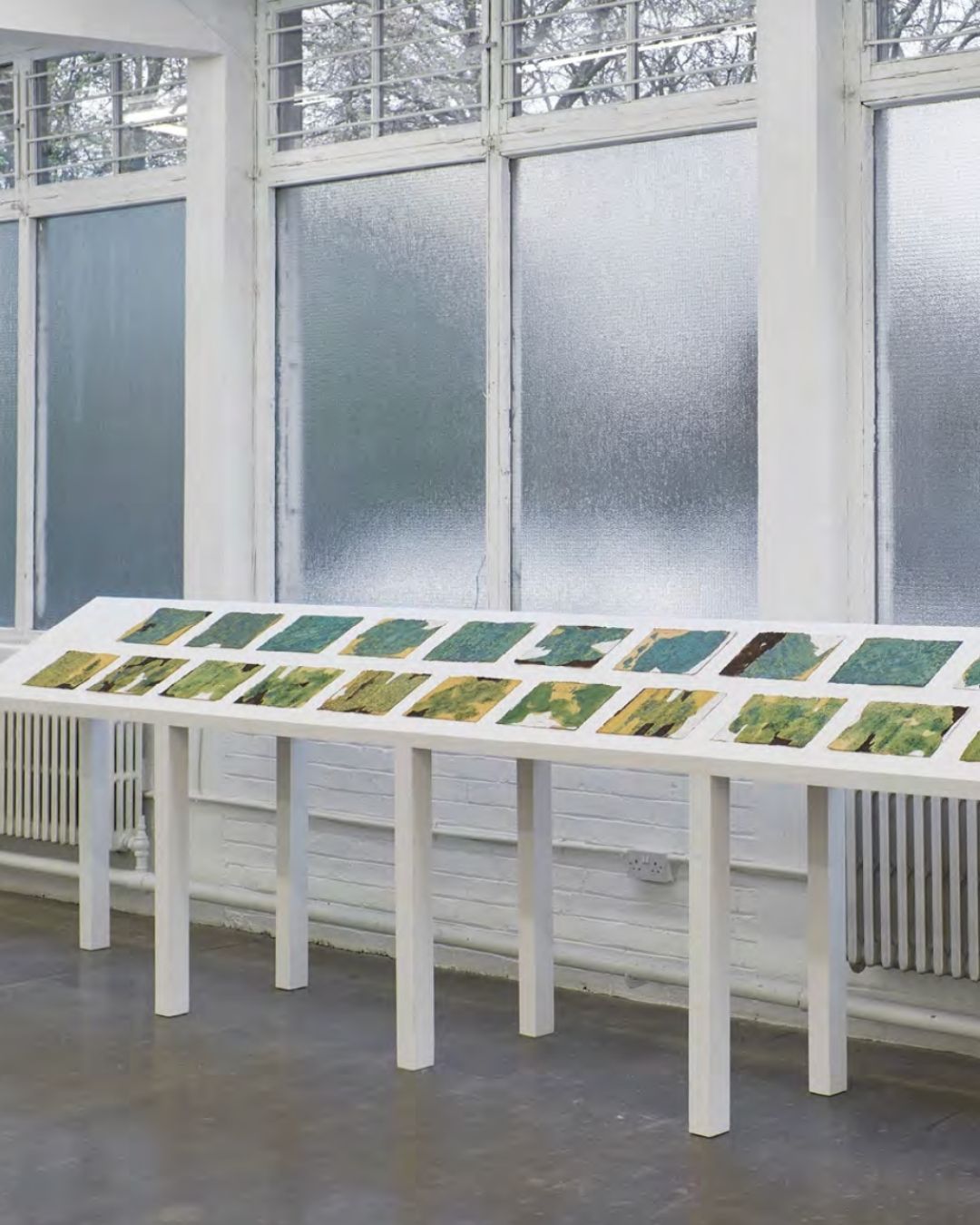
Selected works by Francis Offman from our archives
Transkript Francis Offman
CD: Today, we’re starting with something that might sound simple but is actually quite radical. Artist Francis Offman says: „Materials form a language.“ And we’re going to explore what that means.
EB: Francis Offman, a conceptual painter I would call him. He works with unstretched canvas, found materials. Scraps of paper of all sorts. Dried coffee grounds and paint. Materials that have already lived a life. Offman´s woven landscapes are filled with words. I have been following his work for quite some time now – 2024 the curator Kami Gahiga nominated him as a nominee for the Norval Foundation / Norval Sovereign African Art Prize, which Francis has been shortlisted for. We talked briefly about the Norval Foundation in Cape Town with Brett Scott in our previous Episode. So a lot to discover and unpack here…
CD: Materials that have lived a life – I think that is the interesting part. When we talk about materials in art, we usually think about their formal properties. Color, texture, form. But Offman is suggesting something different. That materials themselves carry meaning. That they speak.
EB: They carry a kind of history. A coffee wrapper isn’t just a coffee wrapper. It’s a moment of consumption. A routine. A relationship between a person and their daily life – if of course, they like to drink coffee (chuckles)
CD: Right. But Adorno would push further. He wrote about natural material in his “Ästhetische Theorie” (Aesthetic Theory) in the context of the Art Povera movement. His point was that there’s no such thing as a „natural“ material in art. Every material is already embedded in systems of meaning. It’s never innocent.
EB: So when Offman uses coffee grounds, he’s not using something innocent or raw. He’s using a material loaded with meaning. With labor. With global trade. With ritual.
CD: Exactly. We imagine „found materials“ as maybe something like untouched, as if they’re waiting to be discovered. But that’s a kind of fantasy. Every material carries the weight of its own making.
EB: Which is why Offman’s work is so interesting. His canvases have irregular contours. They’re not mounted on stretchers. They’re more like objects than paintings floating in the space. And then he inserts these scraps—bread wrappers, shoeboxes—like „rips or wounds,“ as one curator described it.
CD: Precisely. The material’s own past is literally breaking through the surface. It’s not hidden. It’s confrontational.
EB: And the way he presents them, directly pinned to the wall, unstretched, exposed. The borders are visible. There’s a vulnerability to it. A very human aspect.
CD: That vulnerability is part of the language too. The work is saying: I’m fragile. I’m exposed. I’m here.
EB: The formal impression is quite striking. You have these vivid, flat, uniform colors, almost graphic in their intensity. Acid greens, bright pinks, vivid blues. And then suddenly these collage zones with scraps of paper that disrupt the surface. It creates this tension between order and chaos.
CD: Which is exactly what Offman is doing conceptually. He’s creating a visual language that mirrors the language of materials themselves. The smooth, controlled color fields represent one kind of order. The scraps represent the intrusion of reality, of use, of wear, of time.
EB: And the irregular contours of the canvas itself, they’re not rectangular. They’re jagged, fragmented. The canvas becomes part of the composition, not just a container for it.
CD: It’s a refusal of the traditional painting format. The canvas isn’t neutral. It’s active. Extending itself beyond the classical rectangle.
EB: All of his works are untitled. That’s significant. By refusing to name them, he’s refusing to fix their meaning. The language of materials is more open than linguistic language.
CD: It’s a gift to the viewer, actually. The possibility of making each work close to you. Of interpreting it through your own experience.
EB: So when we say materials form a language, what are they actually saying?
CD: They’re saying: I have a past. I have a context. I’m not neutral. I carry meaning with me. And you can’t escape that.
EB: Coffee is a perfect example. Almost everyone has a relationship with coffee. It’s a daily ritual. It’s intimate. But it’s also a global commodity. Colonial trade routes. Labor practices. Comfort and dependency all at once.
CD: So when Offman uses coffee in his work, he’s not being sentimental. He’s activating all of that complexity. He’s saying: this material has something to communicate. Listen to what it carries.
EB: And coffee is interesting because it obviously stores and releases flavor. There’s something almost alchemical about it.
CD: Could that be a metaphor for what Offman is doing? He’s extracting meaning from materials. He’s releasing what’s stored inside them. The coffee grounds in his work are activated. They’re speaking.
EB: And the paper scraps, they’re materials from everyday life. Things we usually discard without thinking.
CD: But Offman is insisting: these materials have a language. They have something to say. Their specificity matters. It’s not arbitrary.
EB: The artist was born in Rwanda. He spent part of his childhood in Africa. He witnessed the 1994 genocide before he migrated to Italy in ‘99. And his work references that—fragile references to a faraway world. But he’s not being literal. He’s not creating a narrative. It’s more intuitive than that.
CD: And there’s something important about his refusal of representation. He said: „I completely lost any interest in drawing the human figure“ after what he experienced in Rwanda. The shift to abstraction is a response to trauma. A refusal of representation.
EB: So the language shifted. Instead of representing humans, he’s using materials to express what can’t be represented.
CD: He’s using materials that carry their own specificity, and letting that speak through the work. The materials do the thinking in a way.
EB: The physicality in his work is very present, right? His body seems to be embedded in it. Gestural movements, or the physical endeavor of making.
CD: So the artist’s body becomes part of the material language too. It’s not just the coffee or the paper. It’s the body that touched them. The presence that shaped them.
EB: Which is what Adorno was getting at. There’s no escape from the material’s own context. Even when we think we’re using „found“ or „natural“ materials, we’re actually using materials that are already embedded in systems of meaning.
CD: So the language of materials is the language of their own making. Of labor. Of consumption. Of use. Of memory. It’s a language we don’t always consciously hear, but it’s there.
EB: And that’s what makes Offman’s practice so strong. His way of using materials as a medium of thought is really elaborated. Also an original way of thinking about identity and belonging. It feels intuitive, but it’s deeply considered.
CD: He’s trusting the materials. To speak for themselves. It’s a kind of intellectual humility, actually. I am really, really fond of his work, I have to admit. It is so subtle and human.
EB: So maybe the point isn’t that materials form a language. Maybe the point is that they form an unfinished sentence.
CD: And we’re invited to complete it. Or at least, to add our own words. Not much to disagree this time, Esenija – we’re on the same page. Let’s see what is happening next time.
____
Source/Citation quote: Offman, Francis. „Francis Offman at secession.“ Emergent Magazine, emergentmag.com/exhibitions/francis-offman-at-secession-2.
____
Voice: Esenija Bannan & Charlotte Desaga.
Text: Charlotte Desaga.
Images from our private archives.