“Geometry is in every aspect of my life.“ – Barbara Kasten
In this episode we not only talk about Barbara Kasten but celebrate a true pioneer: The American artist Barbara Kasten turns 90 in June 2026. Her photographs aren’t pictures of things, they’re pictures of light, shadow, and reflection. Geometric compositions built in-camera, a kind of pre-digital alchemy. In this episode, we explore how a lifetime devoted to geometry becomes a rigorous investigation into the nature of perception itself.
 Available on Apple Podcasts & everywhere else — or right here ↓
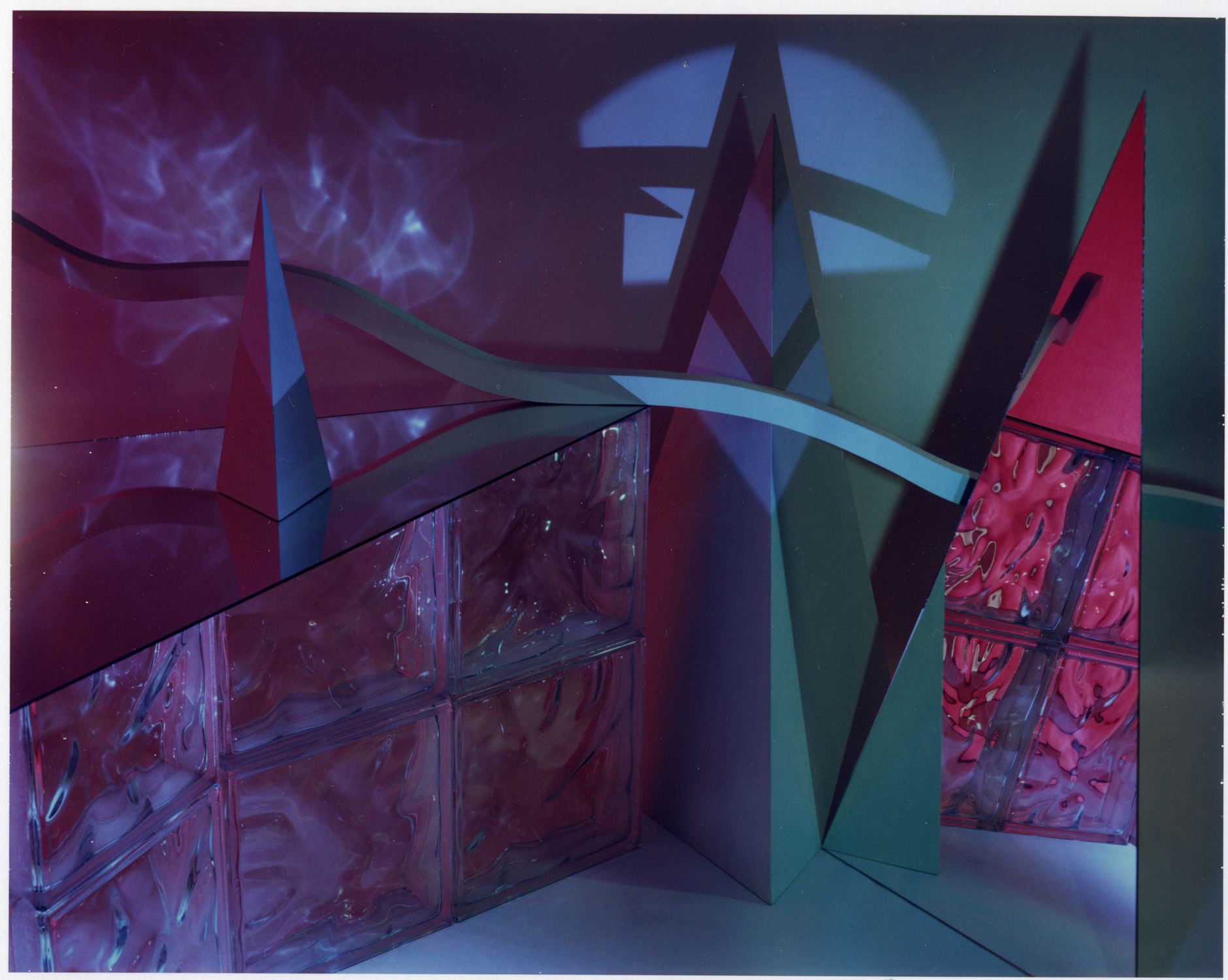
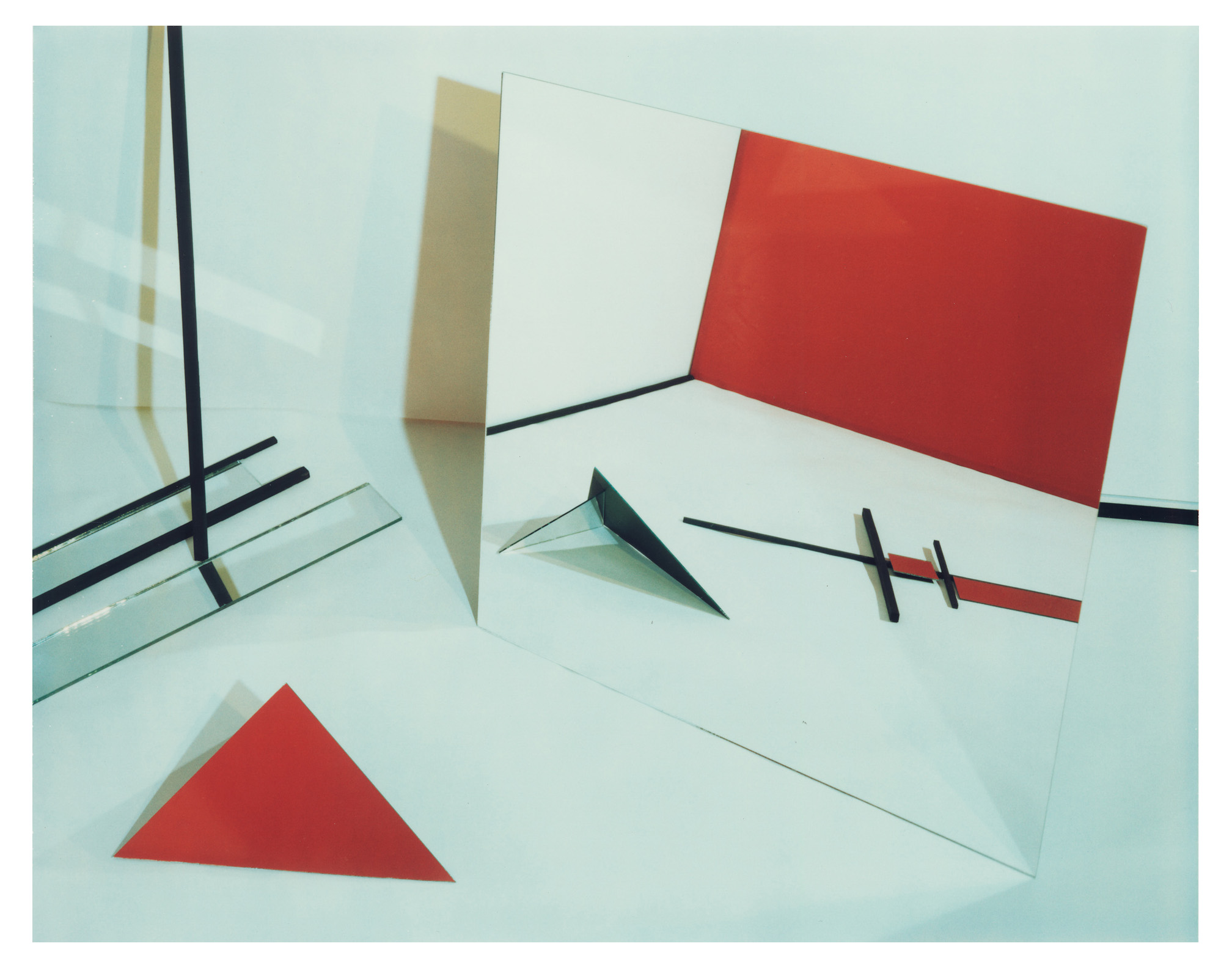
Selected works by Barbara Kasten from our archives
Transkript Barbara Kasten
EB: Welcome back to ART Unquoted, the podcast that unpacks the ideas shaping contemporary art, one quote at a time. I’m Esenija Bannan.
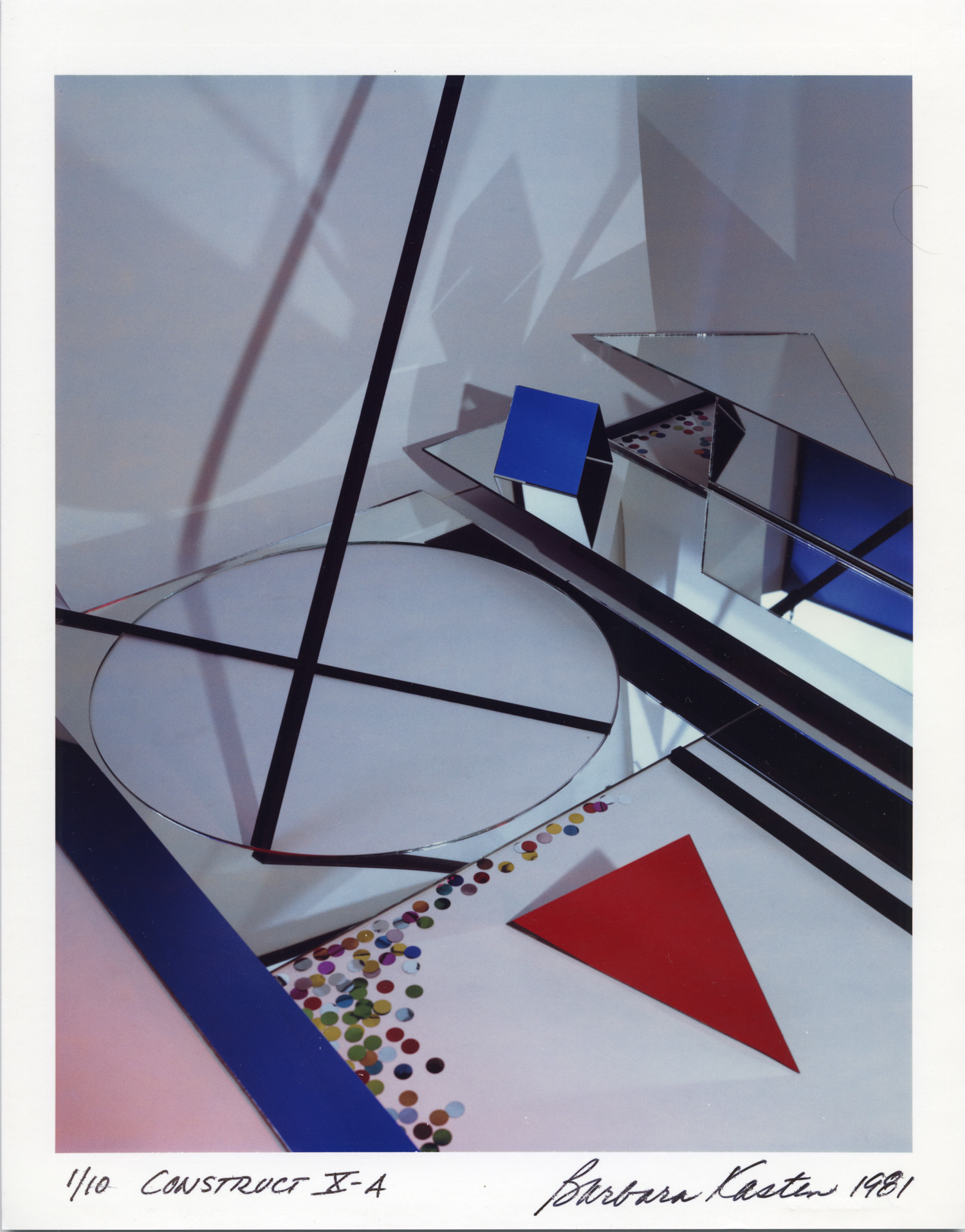
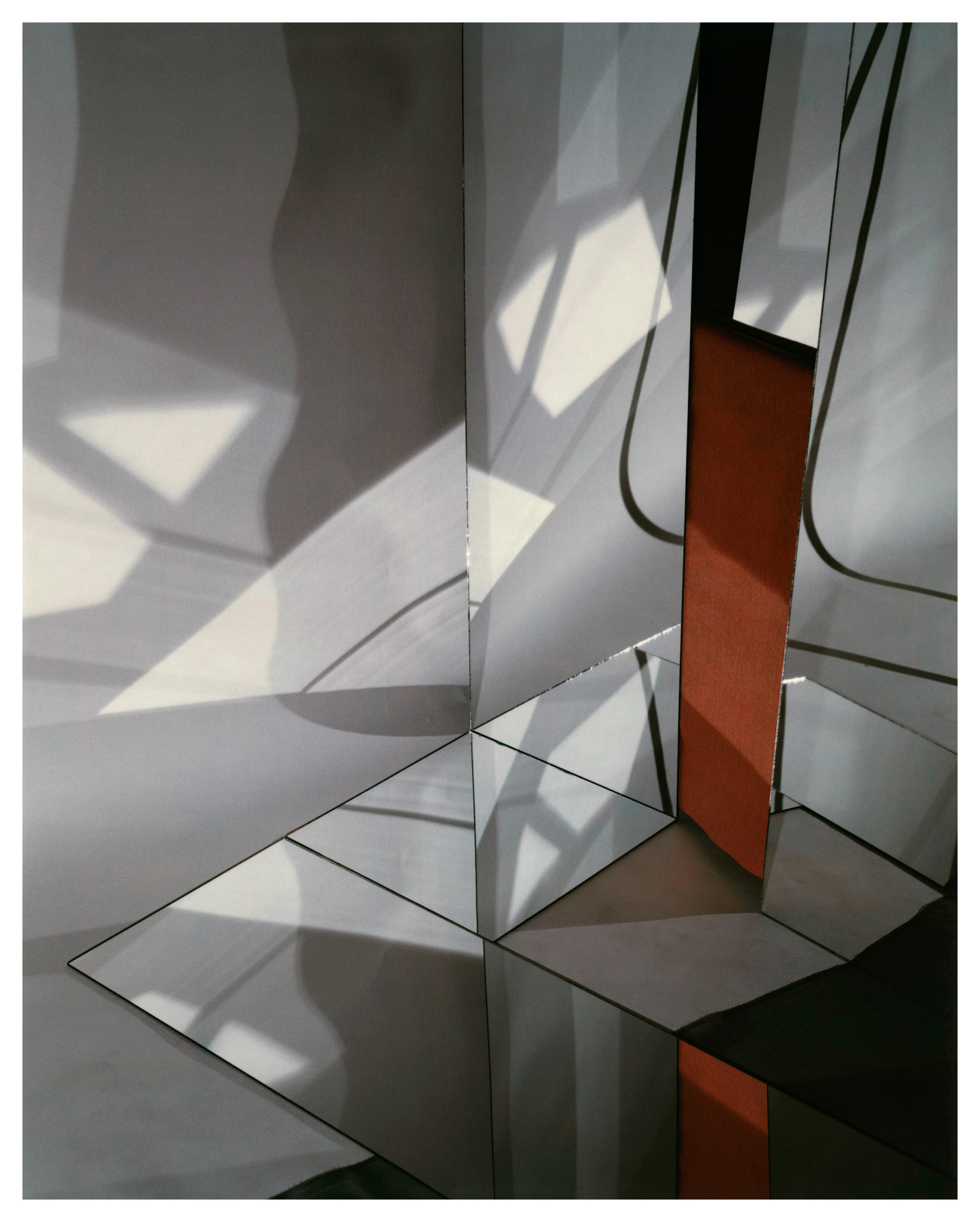
CD: And I’m Charlotte Desaga. Today, we’re celebrating a true pioneer. The American artist Barbara Kasten turns 90 today, on June 29th. For listeners who may not be familiar with Barbara Kasten’s work: Her photographs are not pictures of things, but pictures of light, shadow, and reflection. Think of large-scale, abstract compositions filled with geometric shapes—triangles, squares, and arcs—that seem to float in an undefined space. She achieves this by building elaborate, temporary installations in her studio using materials like mirrors, or glass, and then bathing them in vibrant, colored light. The final photograph captures a fleeting moment where these elements converge into a complex, layered image that feels both architectural and painterly. It’s a kind of pre-digital Photoshop, where everything is constructed in-camera, creating a sense of depth and illusion that is both dazzling and disorienting.
EB: For over five decades, she has been conducting this incredible artistic research into staged photography you just described, and architectural installations, all based on the power of geometry. So, for today’s episode, we chose a quote from her that feels like a perfect distillation of her entire life and practice.
EB: She said, simply: „Geometry is in every aspect of my life.“
EB: It’s such a powerful and elegant statement. It’s not just about her art; it’s about a way of seeing, a way of living. It speaks to this incredible consistency in her vision, from her early photograms to her iconic Constructs series, where she builds these elaborate, almost theatrical installations of mirrors, glass, and geometric props, only to capture them in a single, perfect photographic moment.
CD: It’s true, her dedication to that vision is remarkable. I had the chance to meet her briefly back in 2012, during her opening at the Kunstverein Nürnberg. Even then, what struck me was the precision of her thinking. She spoke about her work with such clarity. It wasn’t just about creating beautiful abstract images; it was a rigorous investigation into the nature of perception itself, which brings me to a question for you, Esenija. What is your take on geometry? Does her usage of light, (interior and exterior) shape the space? Or perhaps even transforms it completely?
EB: Absolutely, her implementation of light in the space – finding the gentle shadow on the floor, or in the reflections, is what gives the colored objects its geometry. At first glance her ensembles, sculptures, constructions even, makes one think of Lázló Moholy-Nagy and the influence of the Constructivist movement. And of course BAUHAUS, especially since Kasten grew up in Chicago, a city that has a profound Bauhaus legacy. The German-Architect, Ludwig Mies van der Rohe was the last Bauhaus director (at that time in Berlin) before he emigrated to the United States in 1938. Chicago became his home and Mies left a tremendous mark on the architectural landscape of the city and around it e.g. Edith Farnsworth House in Plano (completed in 1951), which is only 1h outside of Chicago and to this day, is an icon of modern architecture. So in a way, the simplified geometry and the horizontal lines of Mies van der Rohe or the complex geometry in Bertrand Goldberg architecture as we can see in his Marina City completed in 1964, is omnipresent in her art works. Kasten often talks about her work being “constructed” and I can absolutely imagine that Chicago played a significant role in her artistic practice. And going back to Mies, his architectural language is all about connecting the outdoors with the indoor spaces – negative corners. It transforms the space entirely. I see the same harmony of indoor-outdoor and similar transformation in her photogenic paintings from the seventies, or the photographs of the compositions she consistently creates.
CD: So, the photograph isn’t a window into a space, but the space itself.
EB: Exactly. And that’s where the depths of her work lies.
CD: This brings to mind the philosopher Plato, who believed that number is the fundamental principle of reality. This conviction was so central to his thought that he had inscribed above the entrance to his Academy the famous dictum: ‚Let no one ignorant of geometry enter here” – in greek, of course, not in english (laughgs).
EB: Ha, quite a high bar…
CD: Yes, but for Plato, geometry was the key to understanding the invisible, eternal truths that underlie our reality. When Kasten says, „Geometry is in every aspect of my life,“ for me that’s a modern continuation of that idea. Her photographs aren’t mere abstractions; they’re an attempt to make these fundamental structures of perception visible.
EB: So you see her as a kind of Plato truth-seeker, only with a camera and mirrors instead of a compass and ruler?
CD: In a way, yes. She makes the invisible laws of space and light visible.
EB: But what I find equally fascinating is how her work has remained so consistent in its vision while also evolving with technology. She started with photograms in the 1970s, then moved to the Constructs series with mirrors and glass, and now in her recent work, she’s still exploring these same fundamental questions about light, geometry, and perception.
CD: That’s a great point. Consistency is one of the points that makes her work so powerful. In a world where one trend is chasing the next trend, Kasten has remained faithful to a single, rigorous line of inquiry. She’s not trying to be everything to everyone; she’s deepening her investigation into the same core questions. That’s a kind of integrity that feels increasingly rare.
EB: It really is. And I think that’s what the quote „Geometry is in every aspect of my life“ really stands for:. It’s not just a poetic statement; it’s a declaration of commitment. She’s saying that this isn’t a phase or a style, it’s a fundamental way of seeing and being.
CD: As we celebrate her 90th birthday, I think it’s worth reflecting on what her legacy means for contemporary art. Her work reminds us that depth, precision, and sustained inquiry are still valuable. She’s shown that you can spend a lifetime exploring a single idea and still have endless discoveries to make.
EB: Absolutely. And I think younger artists could learn so much from her example. The courage to commit to a vision, the discipline to refine it over decades, the openness to let it evolve while remaining true to its core. That’s a masterclass in artistic practice.
CD: Agree!
____
Source/Citation quote: Hewitt, Leslie. „Barbara Kasten.“ BOMB Magazine, March 18, 2015. https://bombmagazine.org/articles/2015/03/18/barbara-kasten/.
____
Voice: Esenija Bannan & Charlotte Desaga.
Text: Charlotte Desaga.
Images from our private archives.