„In films, there is the wind that blows and the wind that is produced by a wind machine. Computer images do not have two kinds of wind.” – Harun Farocki
A deceptively simple observation that changes everything. The late German filmmaker and artist spent his career dissecting the politics of images. In this episode, we explore what Farocki’s final work reveals about digital images, simulation, and the future of visual culture, from video games to AI.
 Available on Apple Podcasts & everywhere else — or right here ↓
Selected works by Harun Farocki from our archives
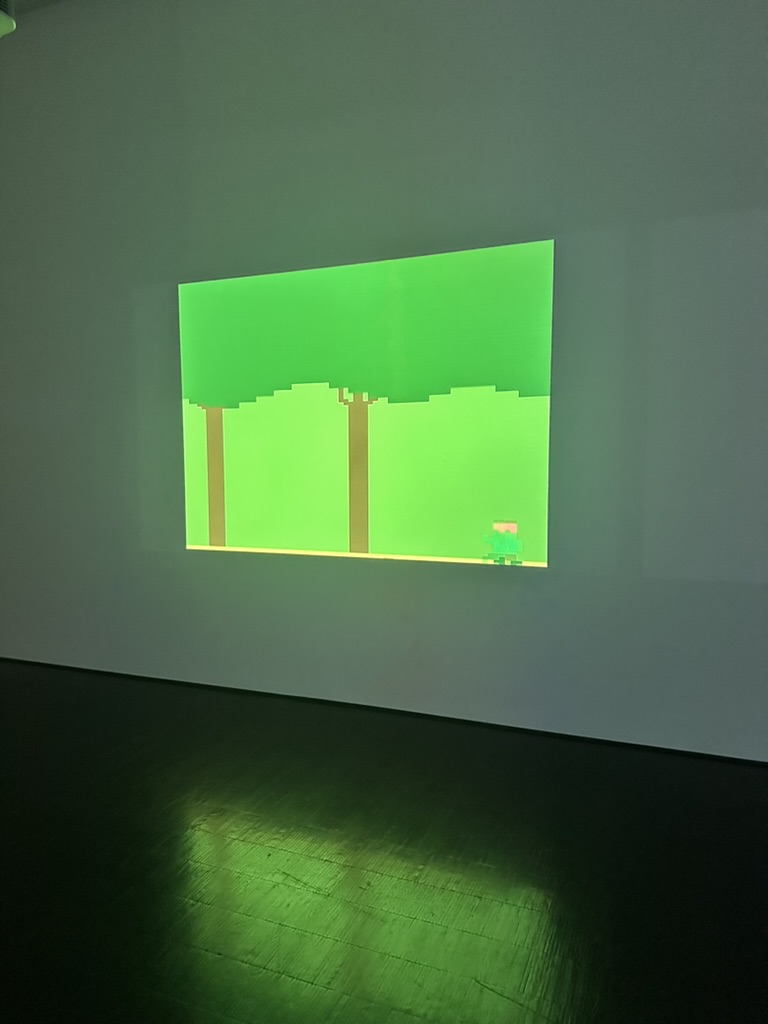
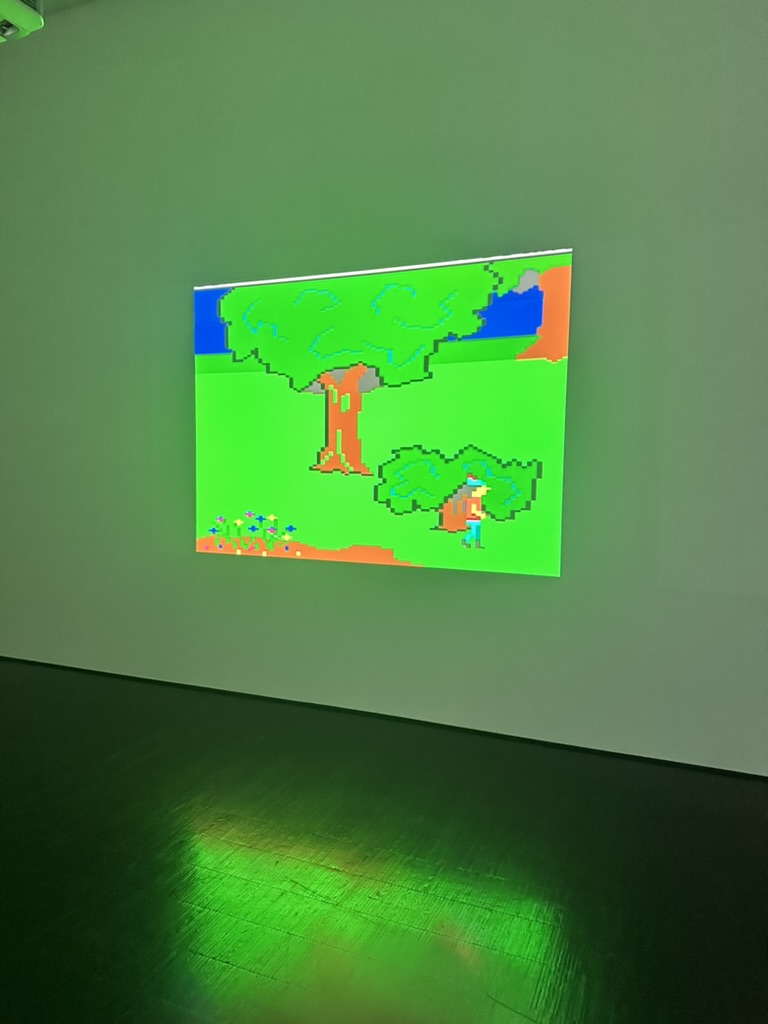
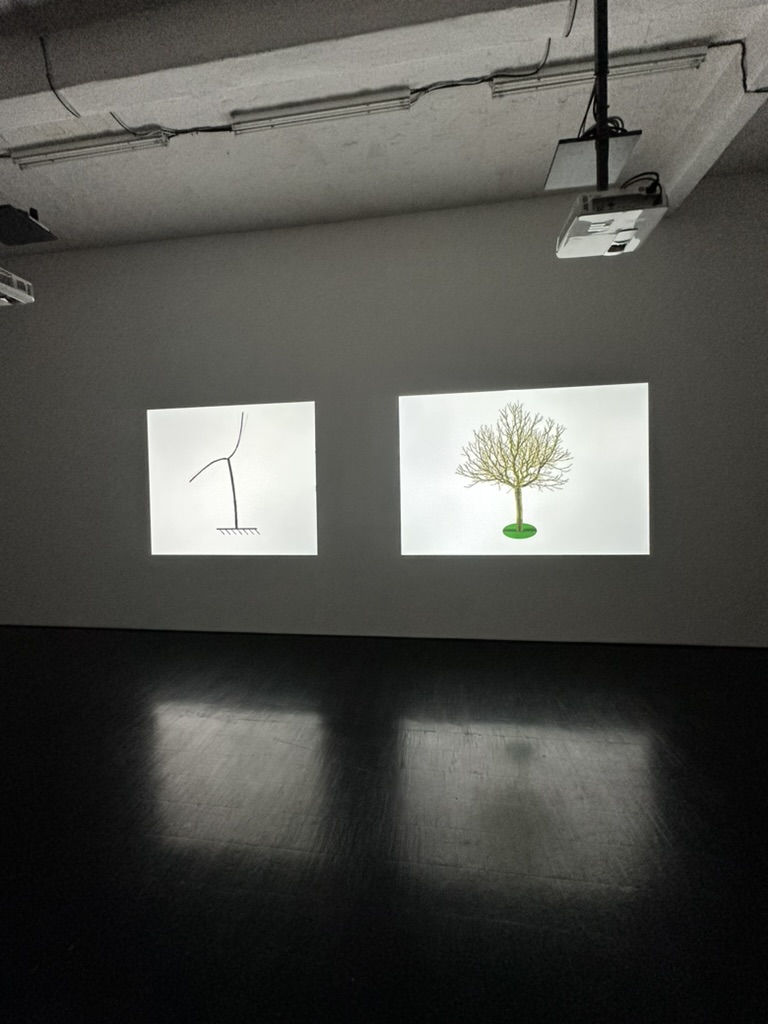
Transkript Harun Farocki
EB: Today, we’re diving into a quote from the late, Harun Farocki, a German filmmaker and artist who spent his career dissecting the politics of images. The quote is from his final work, „Parallel I–IV,“ a four-part series about the evolution of computer-generated images. He said: „In films, there is the wind that blows and the wind that is produced by a wind machine. Computer images do not have two kinds of wind.“
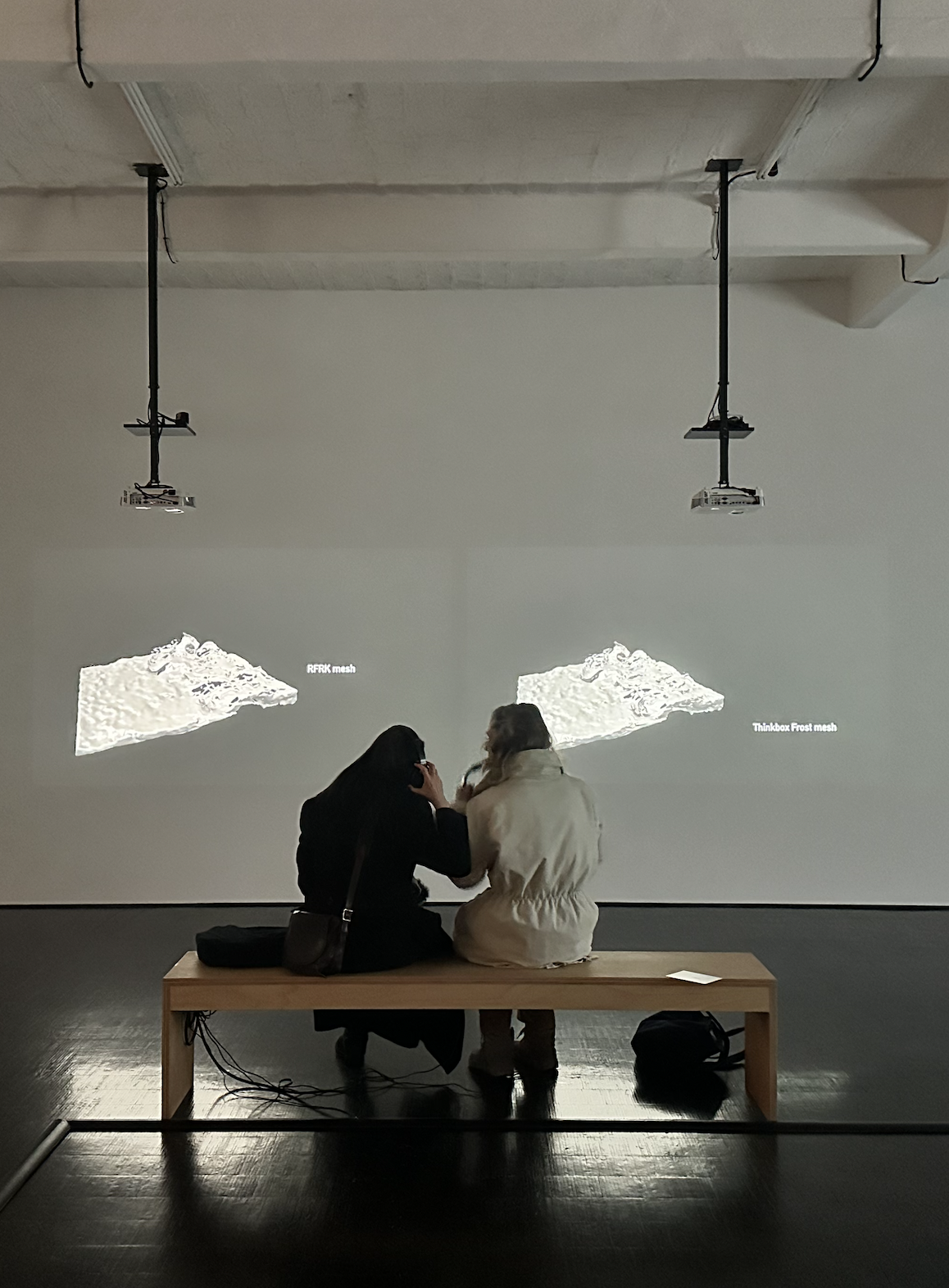
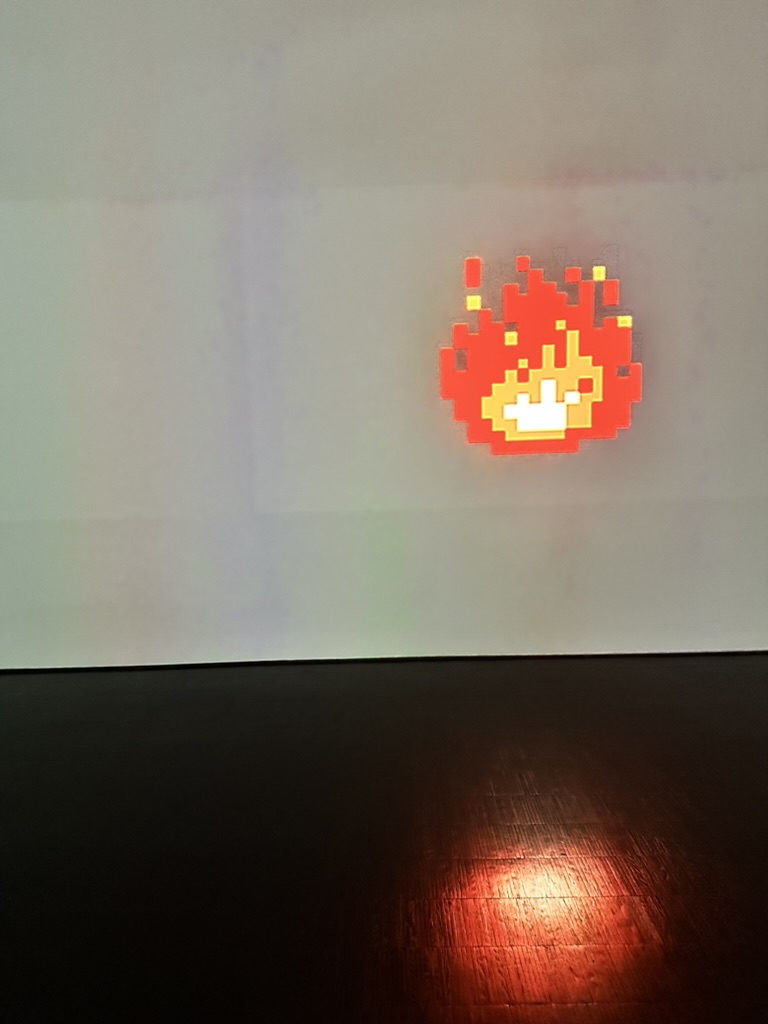
CD: It’s a deceptively simple statement, isn’t it? On the surface, it sounds almost trivial. But it’s one of those observations that, once you hear it, you can’t un-hear it. It completely changes how you look at digital images. Just recently we both saw Harun Farocki’s final major work, Parallel I–IV (2012–2014) at his gallery representation in Berlin. An impressive four-part video essay that functions as an archaeology of the digital image. In it, Farocki meticulously traces the evolution of computer graphics over 30 years by focusing on how video games have attempted to represent the real world. I think we were both quite impressed by it.
EB: Exactly! For me, it’s a profound insight into what makes digital images fundamentally different from film or photography. In film, you have this connection to the real world, even if you’re using a wind machine, it’s still a physical object creating a physical effect that’s captured on camera. There’s a distinction between what’s real and what’s constructed.
CD: But in computer images, that distinction is gone. All wind is equally artificial, equally constructed by code. There’s no “real” wind to capture. It’s all just simulation. And that’s Farocki’s point, isn’t it? That computer images don’t represent reality; they construct it from the ground up. As he says: A new kind of constructivism.
EB: And that’s what I find so fascinating! He’s arguing that computer graphics, even as they become more and more photorealistic, are moving further away from the logic of photography and closer to the logic of painting. Just as photography freed painting from the obligation to represent reality, Farocki suggests that digital images might now be freeing photography from the same obligation.
CD: I see the parallel he’s drawing, but I’m not sure I entirely agree. Photography was a radical break because it had an indexical relationship to reality, the light that bounced off the object was the same light that hit the film. It was a direct trace. Digital images have no such connection. They’re pure information. So to say they’re “freeing” photography feels a bit… generous. Isn’t it more like they’re replacing it with something else entirely?
EB: But that is the crazy part! They’re not just replacing it; they’re opening up new possibilities for what an image can be. If an image no longer has to be a representation of something that exists in the world, it can be a proposition, a model, a world in itself. Think about how artists are using CGI and 3D modeling today, they’re not just creating realistic simulations; they’re building entirely new visual languages.
CD: But are they? Or are they just getting better at mimicking the visual language of cinema? Farocki himself was critical of how computer games, for all their technical sophistication, still rely on the conventions of film—the first-person shooter perspective, the cinematic cutscenes, the narrative structures. He even expressed dismay that montage, the collision of images to create meaning, was being replaced by the seamless, endlessly flowing movement of game worlds.
EB: I think that’s a fair critique, but it also points to what makes digital images so powerful. They create immersive, continuous worlds that we can inhabit. And that’s a different kind of experience from the critical distance that montage creates. It’s more about presence and embodiment. And artists are exploring that, too, think of the virtual reality works of artists like Jon Rafman or the immersive installations of Hito Steyerl.
CD: But that’s where I get skeptical. Is that immersion always a good thing? Or does it just make us more susceptible to the seductive power of simulation? If there’s no distinction between the real and the constructed, how do we maintain a critical perspective? How do we know what’s true? And what does “inhabit” mean in the context of the virtual world? I doubt that I can actually fry an egg with zeros and ones when I am hungry.
EB: I think that’s the question Farocki is asking us to consider. He’s not saying that digital images are good or bad; he’s just saying that they’re different. And we need a new way of looking at them, a new kind of visual literacy. We need to understand that when we see a tree in a video game, it’s not a representation of a tree; it’s a constructed object with its own internal logic. And that changes everything.
CD: So, for you, the “two winds” are a metaphor for two different ways of understanding the world: one based on representation and one based on simulation.
EB: Exactly. And Farocki is telling us that we’re moving from one to the other. And we need to pay attention to what that means, for art, for politics, for how we understand reality itself.
EB: And now we have AI-generated images. Which takes Farocki’s point even further, there’s no camera, no wind machine, no physical process at all. Just algorithms predicting pixels.
CD: Exactly. And that’s where it gets unsettling. With a video game, at least there’s a programmer making intentional choices. But with generative AI, we don’t even know what logic is creating the image. It’s a black box. So Farocki’s distinction between two kinds of wind becomes three: the real wind, the constructed wind, and now… the predicted wind.
EB: The predicted wind. I like that. It’s not even trying to simulate reality anymore. It’s just extrapolating from patterns in data.
CD: Which means we’re even further from any connection to the real world. And we have no framework yet for understanding what that means. We’ve lost authorship. We’ve lost the human gesture. An image used to mean something because someone made it. But now? It’s just statistical noise. And without meaning, without intention, we’re left with nothing but hallucinations pretending to be images.
EB: Or we’re witnessing the emergence of a new kind of creativity.
CD: That’s a beautiful idea but to me it looks already now that we have handed the tools of reality-making and also of simulating creativity to corporations and governments.
EB: We’ve always lived in a world of competing narratives. The difference now is that AI makes the construction visible. It shows us that meaning is made, not found. Could it also be an opportunity to create new meanings, new ways of seeing, new possibilities?
CD: New meanings? Or just the flattening of all meanings into a kind of visual consensus? AI doesn’t create the strange or the difficult, it averages them out. It’s the triumph of the mediocre in a super fancy dress.
EB: Maybe. But artists will use it to subvert that. They’ll push it, break it, interrogate it. That’s what artists do with every tool. And in that process, they’ll discover things we can’t yet imagine. Not despite the technology, but through it.
CD: Let’s see. I am curious to inspect these discoveries once they come along. I hope they will bring along good quotes.
EB: A lot to think about. Join us next time on Art Unquoted.
____
Source/Citation quote: Farocki, Harun. Parallel I–IV. Video installation, 16 min., color, sound. Germany, 2012. Harun Farocki Filmproduktion.
____
Voice: Charlotte Desaga & Esenija Bannan.
Texts by Charlotte Desaga.
Semi-automatically translated.
Images from our private archives.