 Available on Apple Podcasts & everywhere else — or right here ↓
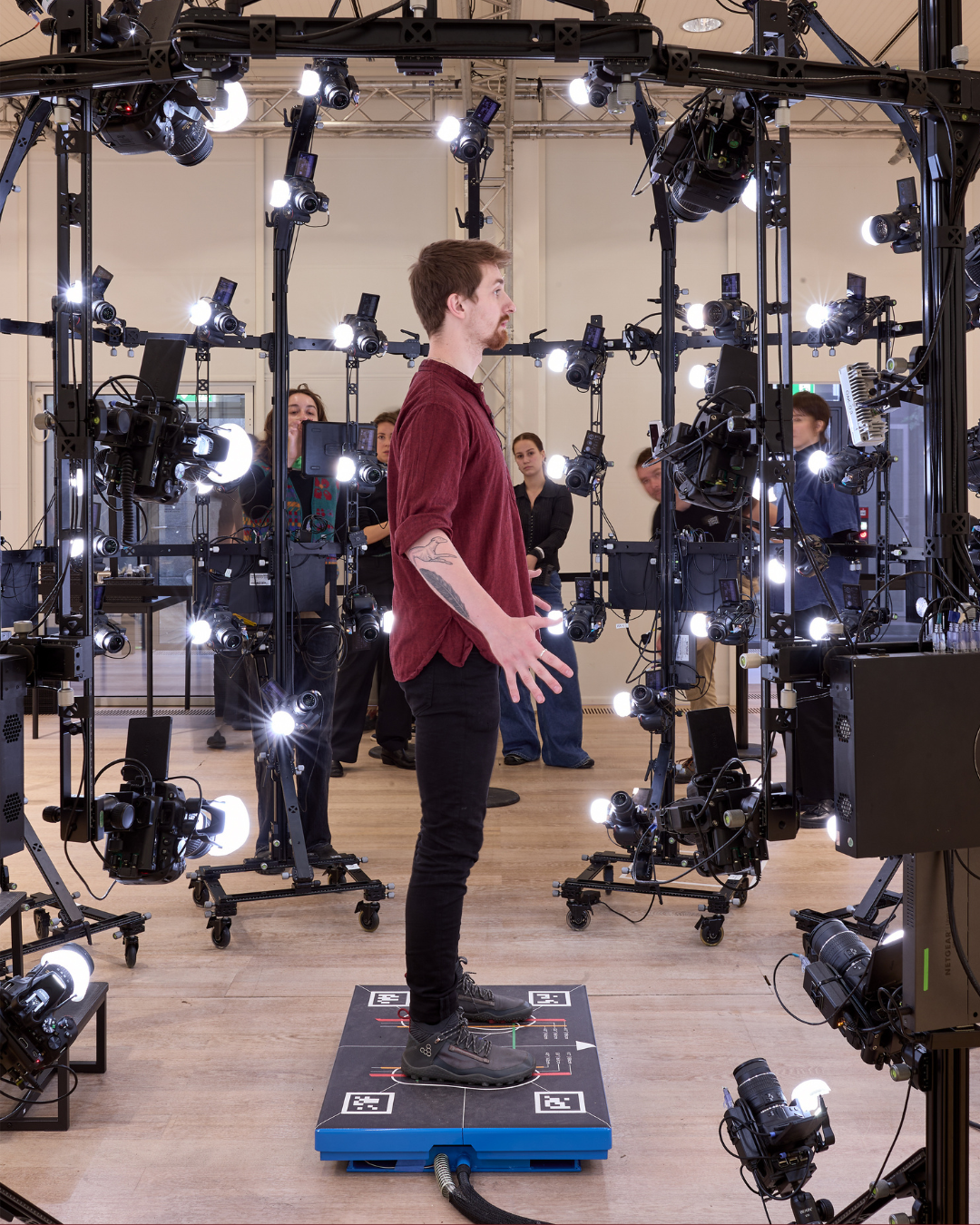
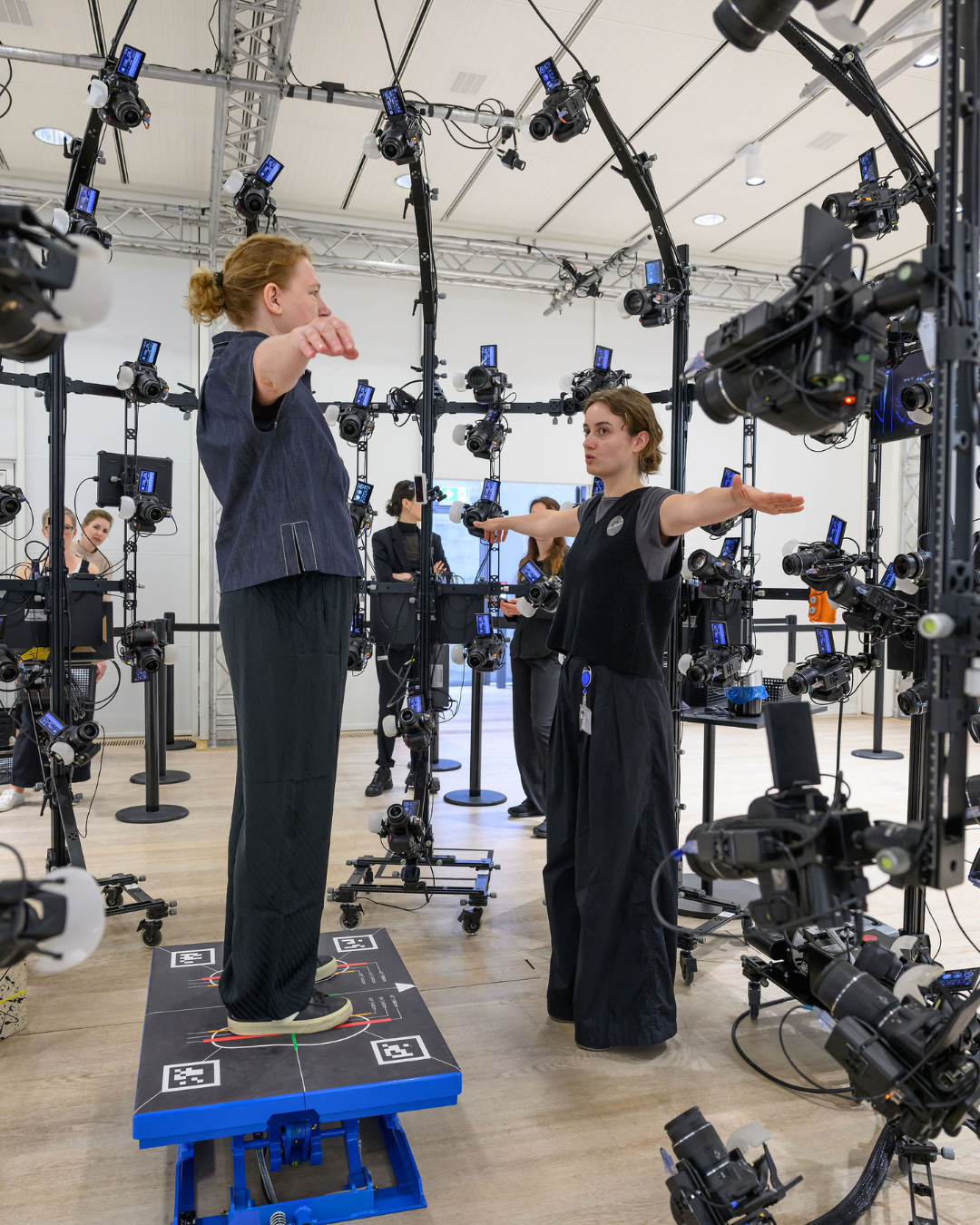
Installation view: Fondation Beyeler, Riehen/Basel, 2025
Jordan Wolfson (*1980), Little Room, 2025
3D scanning booth, VR headset, high-definition video
Dimensions variable
© Jordan Wolfson. Courtesy Gagosian, Sadie Coles HQ, and David Zwirner. Photo: Mark Niedermann
Transkript Episode 09
CD: „I stuff the intuitive inside of the practical.“ That’s Jordan Wolfson. And I have to say, Esenija, when I first encountered his work, I couldn’t look away. But there’s something deeply unsettling about it.
EB: That’s the reason why I wanted to talk about his approach and specifically about his work Little Room at Foundation Beyeler I saw in June of last year. It is an immersive installation that invites visitors to enter an experimental spatial experience where they become active participants. A virtual space that transforms them into agents of their own experience.
CD: That sounds slightly intimidating. But let’s start with more context: The US American artist Jordan Wolfson is known for his provocative and unsettling works across various media. After beginning his career as a video artist, he now works with animatronics, robotics, virtual reality, holography, digital animation… and his work is shown internationally. Ok, so: back to Little Room. What do you think about it?
EB: It silenced me and moved me deeply. Because it was like nothing I have encountered before, nothing I could, can compare it to.
CD: Yes, and it is that intensity that makes it impossible to look away.
EB: Something about his work is hard to put into words or describe it lightly… Obviously, but it’s not just unsettling…. It’s beautiful in a way and enigmatic. And the characters he creates for his installations are creatures, technically extraordinary.
CD: Beautiful? Hm. I’m not sure I’d call those animated figures beautiful. They’re for sure grotesque. They’re designed to make you uncomfortable. The uncanny valley effect is deliberate.
EB: Yes. His creation leaves a mark. Wolfson is definitely not trying to make something comfortable. He’s trying to make something that feels alive. And the technology is so sophisticated that you forget you’re looking at something artificial.
CD: And that is what troubles me most. Are we, in this Western world, so seduced by technical mastery that we are focused on that aspect only. There is much more.
EB: For sure, there is much more. Let’s go back to Jordan’s quote, „I stuff the intuitive inside of the practical,“. Isn’t it about embedding something deeply human, something that can’t be grasped by intellect alone, into these hyper-rational systems? The characters feel wrong because they’re supposed to feel wrong. They’re hybrid creatures.
CD: Yes, and that’s exactly what makes Wolfson’s quote so interesting. He doesn’t say „I stuff emotion into the practical.“ He says intuition. And intuition isn’t the opposite of reason. Our great poet Johann Wolfgang von Goethe called it Anschauende Urteilskraft, a mode of knowing where thinking and perceiving merge. Not mystical. But not purely rational either. A form of deep understanding based on lived experience. And above all: Contemplation.
EB: So you’re saying Wolfson is doing something similar? Embedding that kind of knowing (that whole, lived understanding) into the technology itself?
CD: Precisely. The technology becomes the vessel. The intuition is what fills it.
EB: If we understand intuition as cognitive efficiency, Wolfson’s work doesn’t feel efficient. It feels totally excessive. Baroque, even.
CD: Yes, very baroque. The narratives are fragmented. It’s like he’s deliberately resisting clarity. Don’t you think so?
EB: Yes, because isn’t clarity an illusion anyway? Look at how each of us lives in a subjective reality. We don’t process reality in structural, logical sequences. We feel our way through it. At least I would like to believe that we do (laughs). And Wolfson’s characters, they feel their way through their worlds too. They’re not rational agents. They’re creatures of impulse and desire.
CD: So I don’t know if they are reflections of a Goethe-style intuition but for sure they’re products of a Zeitgeist, of internet culture, of tech industry aesthetics. He’s not just exploring intuition in its pure sense. He’s exploring how intuition has been colonized by commercial systems. It’s a critique of how Western society has been formed by technology. The characters are grotesque because they’re mirrors of us. We’re grotesque in our relationship to technology, and to each other. We’re all hybrid creatures now… part human, part technological.
EB: Now that I agree with. But… I do feel that Wolfson goes further than that. He’s not just criticizing. He’s composing… constructing new forms of life. New ways of being. The characters aren’t just reflections of us. There are… alternatives.
CD: Alternatives to what?
EB: To the rational, efficient, optimized version of humanity that technology promises. Wolfson’s animatronic sculptures remind us that we’re not just brains. We’re bodies. We’re desires. In the end, we are a complete mystery.
CD: Very interesting point. But can technology really capture that? Can code and algorithms really express the ineffable? Or is Wolfson just creating a seductive illusion, a technological sublime that makes us feel something without understanding what we’re feeling?
EB: Maybe that’s the point. You’re not supposed to understand it in a rational way. You’re supposed to allow yourself to feel it, to have an experience that can sometimes feel uncomfortable and liberating. I remember having this exact thought with Little Room, the immersive installation we began talking about in the beginning… His virtual reality installation at the Fondation Beyeler. You see something you want to „unsee“ but can’t. Let me explain what happened to me…
CD: Go ahead! I didn’t get the chance to experience Little Room.
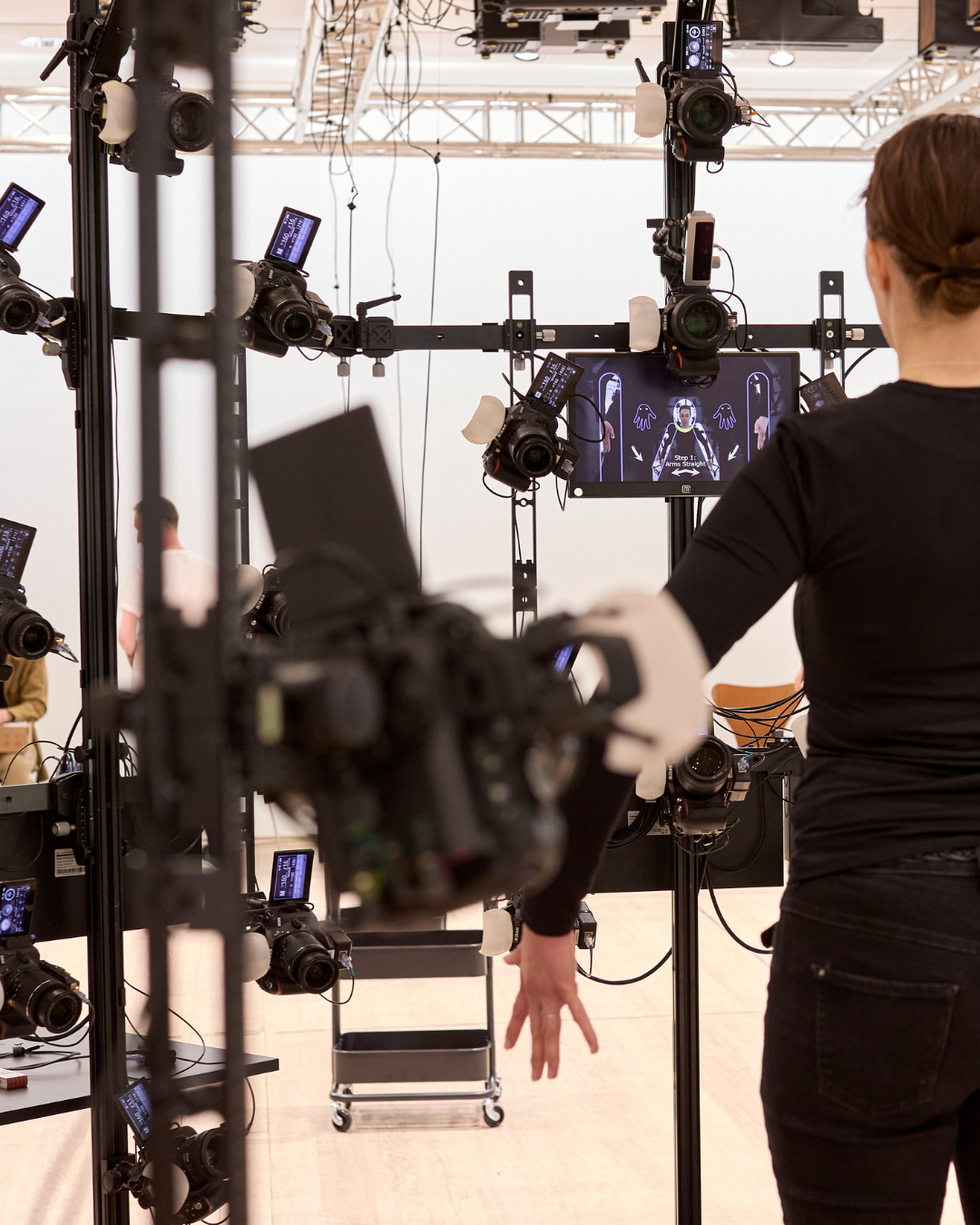
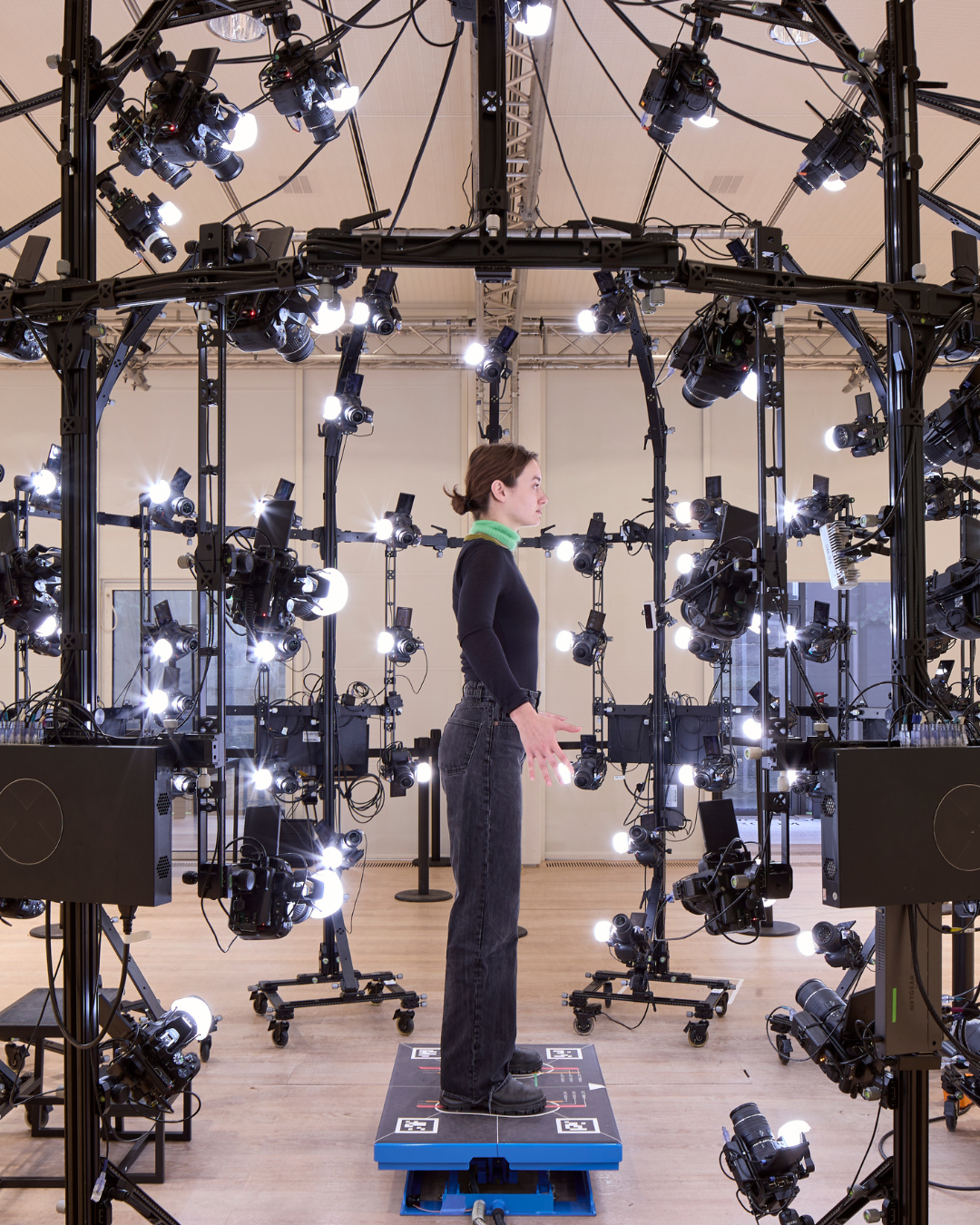
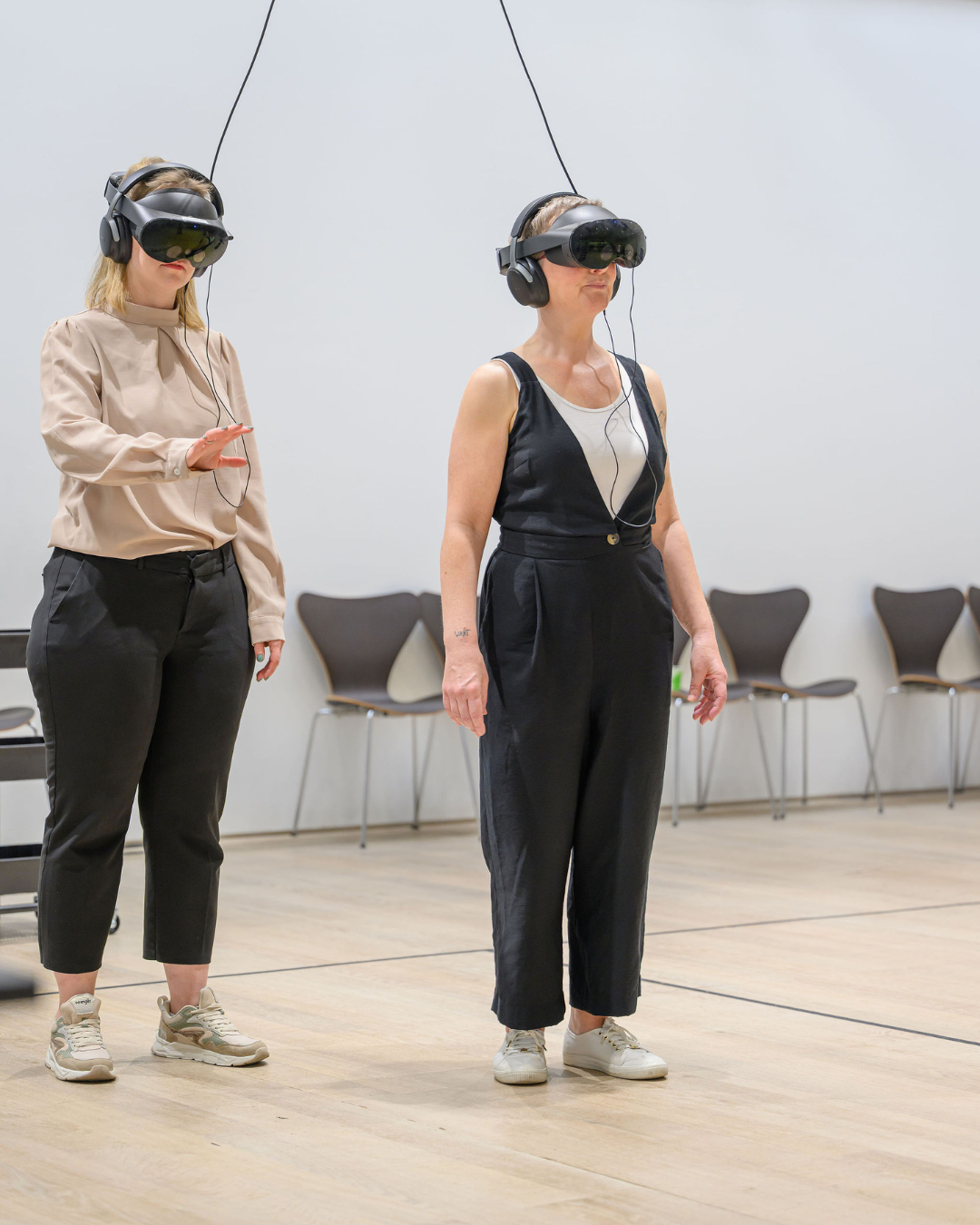
EB: Upon entering, you get your entire body scanned in a full-body scanner. Ninety-six cameras capture every detail. If you come with someone else, which I did, you both get a full body scan. Then your 3D models are uploaded into the VR environment. For twelve minutes inside the VR, I become my partner and my partner becomes me. The entire experience is intense and humbling. You begin moving, imitating each other, being playful and overwhelmed by the swapped body that you are so familiar with and not in control anymore. All while Wolfson’s voice spoke through me, out of my mouth. „God murdered me,“ I watched myself say. „Look at your hands, I love you. Look at your hands, I hate you.“ I felt like being in an Andrei Tarkovsky or Ingmar Bergman film…
CD: Wow, disturbing … And what strikes me about Wolfson’s work is that you can’t understand it in a single moment. It unfolds in time. You have to experience it as it moves. That’s what Goethe meant too – not a snapshot of understanding, but a living, unfolding process of knowing. Duration, not a frozen moment.
EB: Duration. Yes. And maybe that’s what the quote really means. He’s not talking about process. He’s talking about his strategy. The practical – the technology, the code, the mechanics – is the container. And the intuitive is what he pours into it. Something that resists explanation. It makes you feel before you think.
CD: The machine is precise. What it expresses is not. That’s Wolfson’s tension.
EB: And where he puts us. In front of something technically perfect that makes us feel quite lost.
CD: Hypnotized. Unable to look away. That’s where he wants us.
EB: In that liminal space. Between the practical and the mysterious. Between what we can build and what we can’t explain.
CD: And that space between is for sure filled with lots of contrasts…
That’s all the time we have for today. Thank you for listening!
____
Texts by Charlotte Desaga and Esenija Bannan.
Semi-automatically translated.
Images from our private archives.
____
Source artist quote: ArtReview, interviewed by Ross Simonini (February 2024)