„I’m not interested in producing clarity. I’m interested in creating conditions where complexity can exist without being reduced.“
– Ilit Azoulay
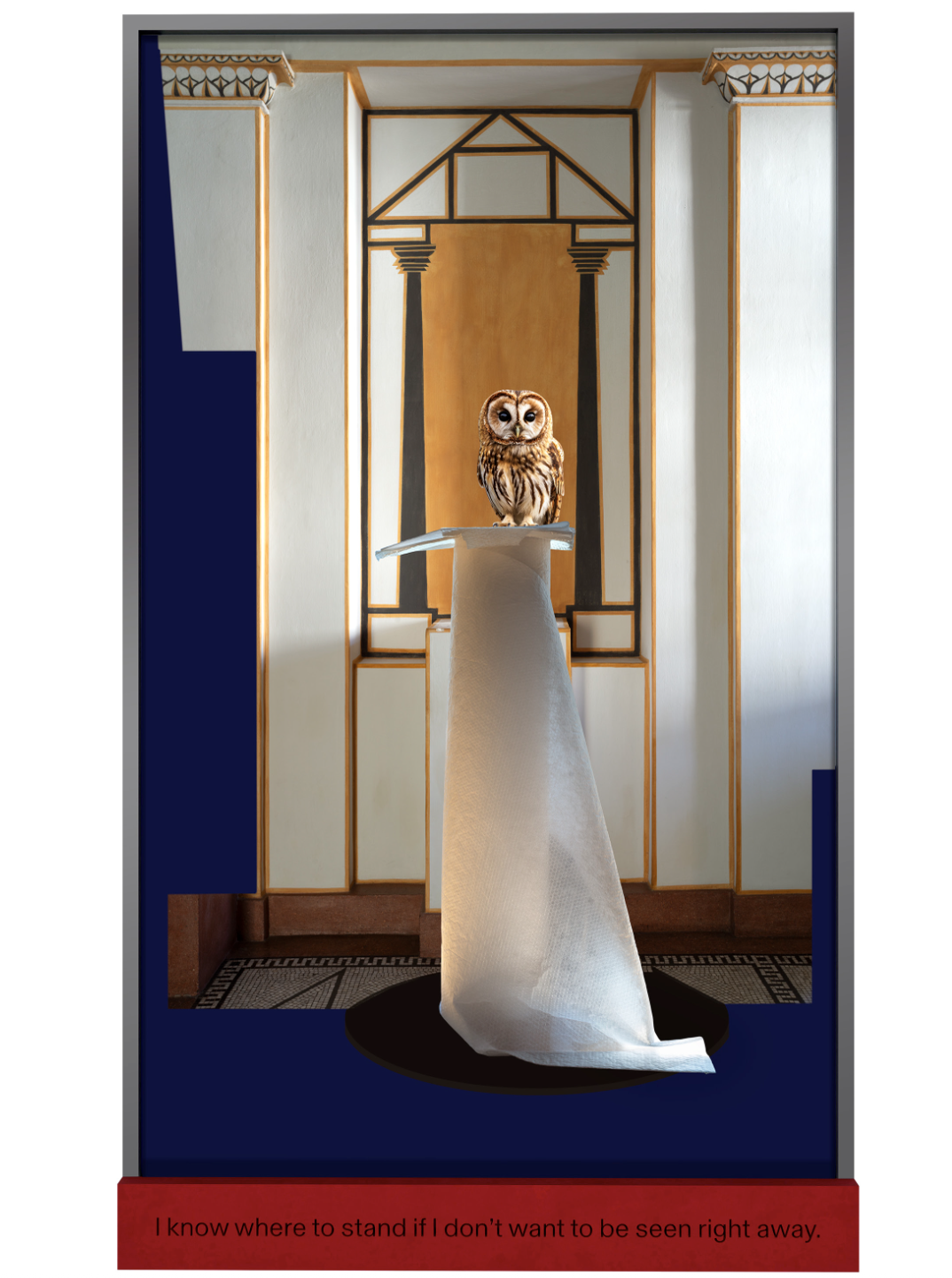
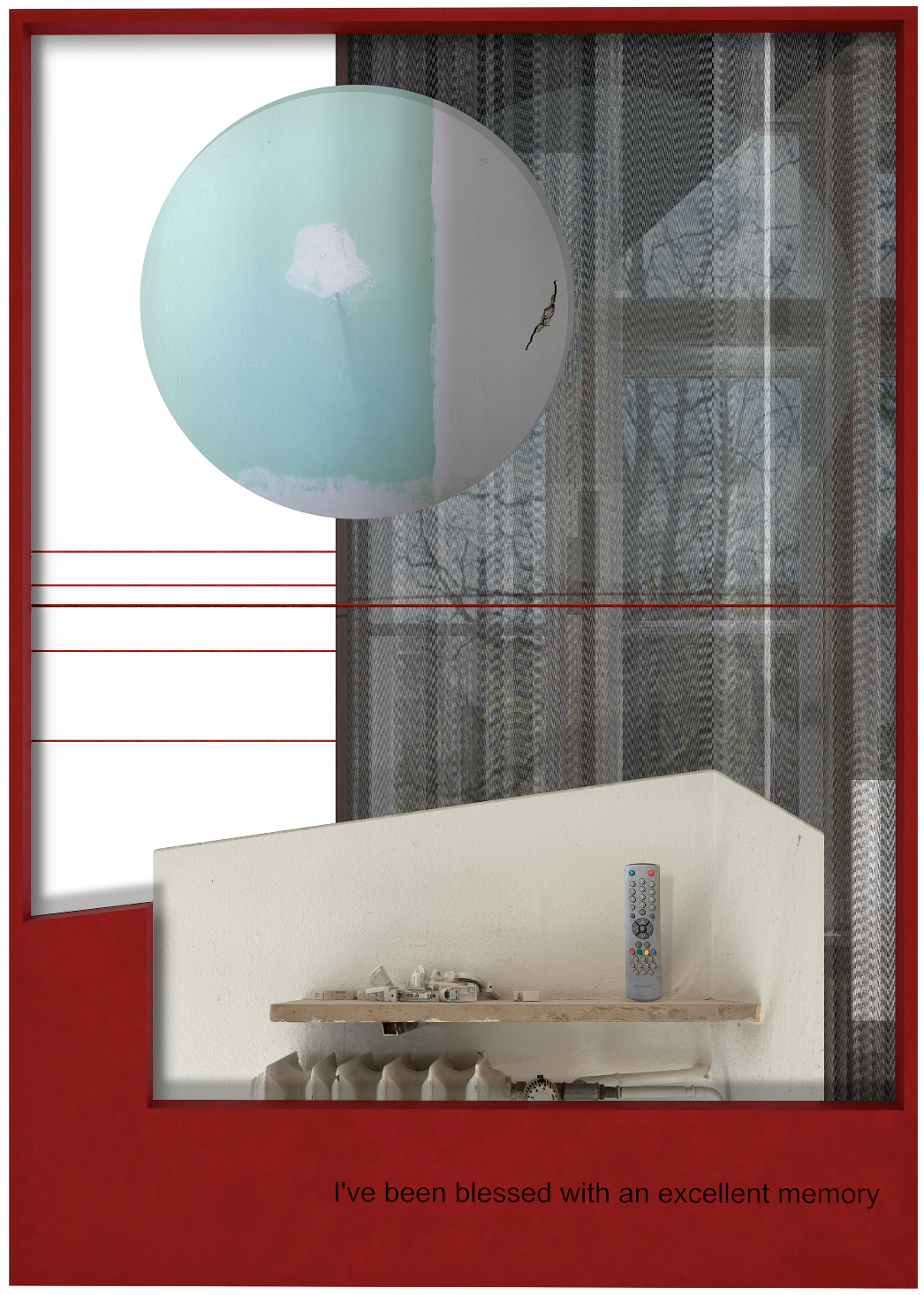
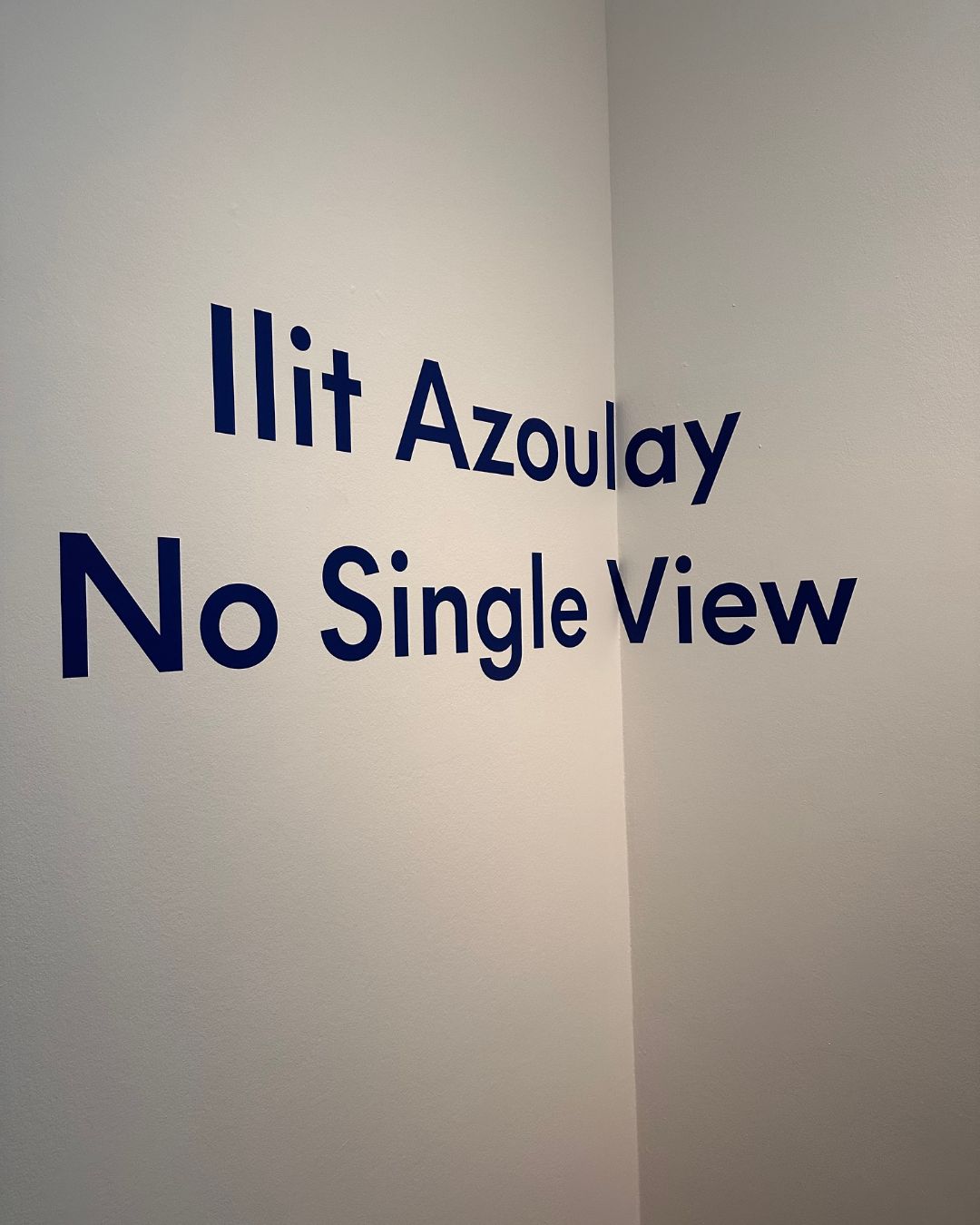
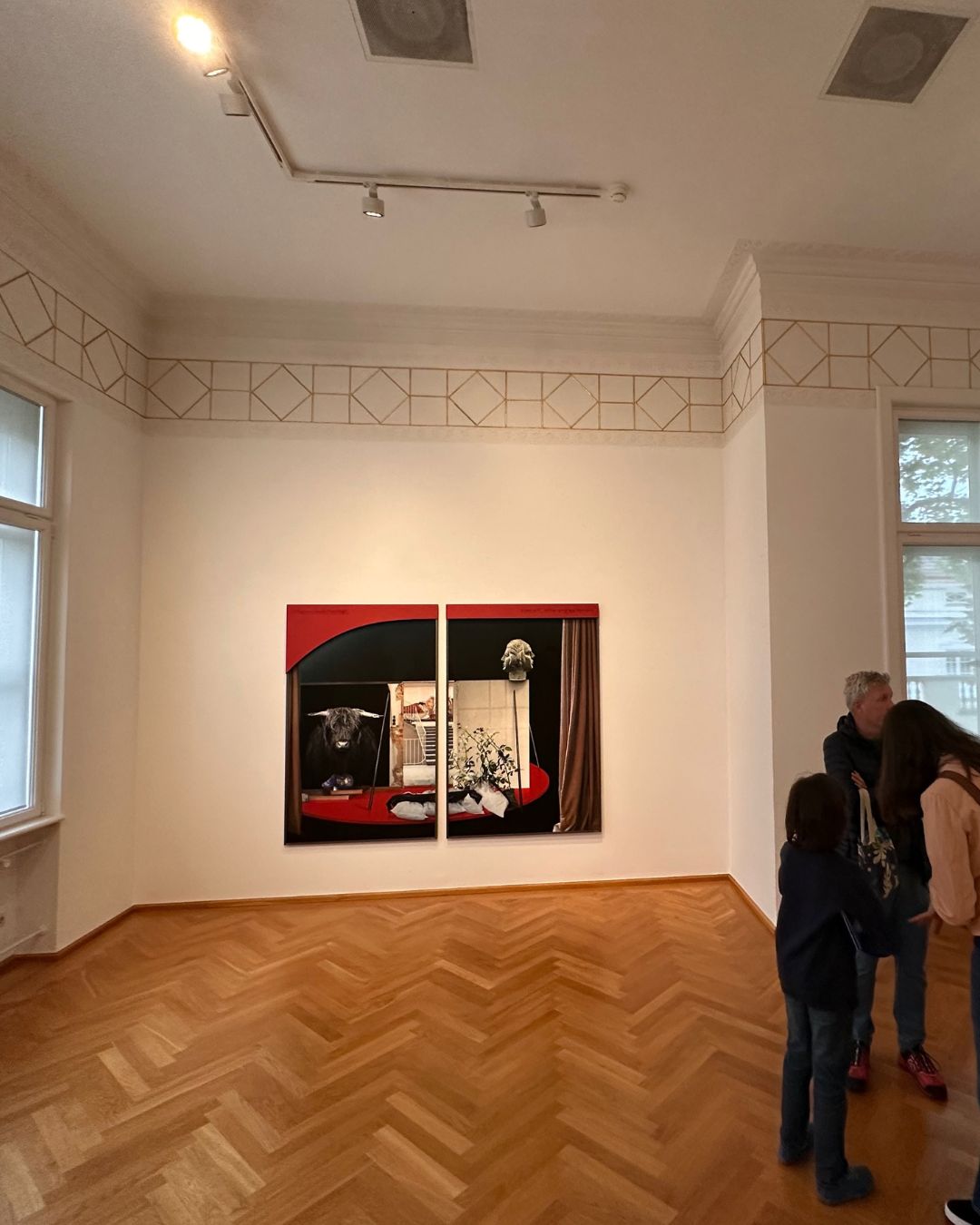
This episode celebrates Azoulay´s recently opened exhibition „No Single View“ at Villa Stuck in Munich. The artist presented photographic works and a video installation using AI as a tool for the first time. In our conversation, we will engage and explore the many aspects of AI and see where it leads us.
 Available on Apple Podcasts & everywhere else — or right here ↓
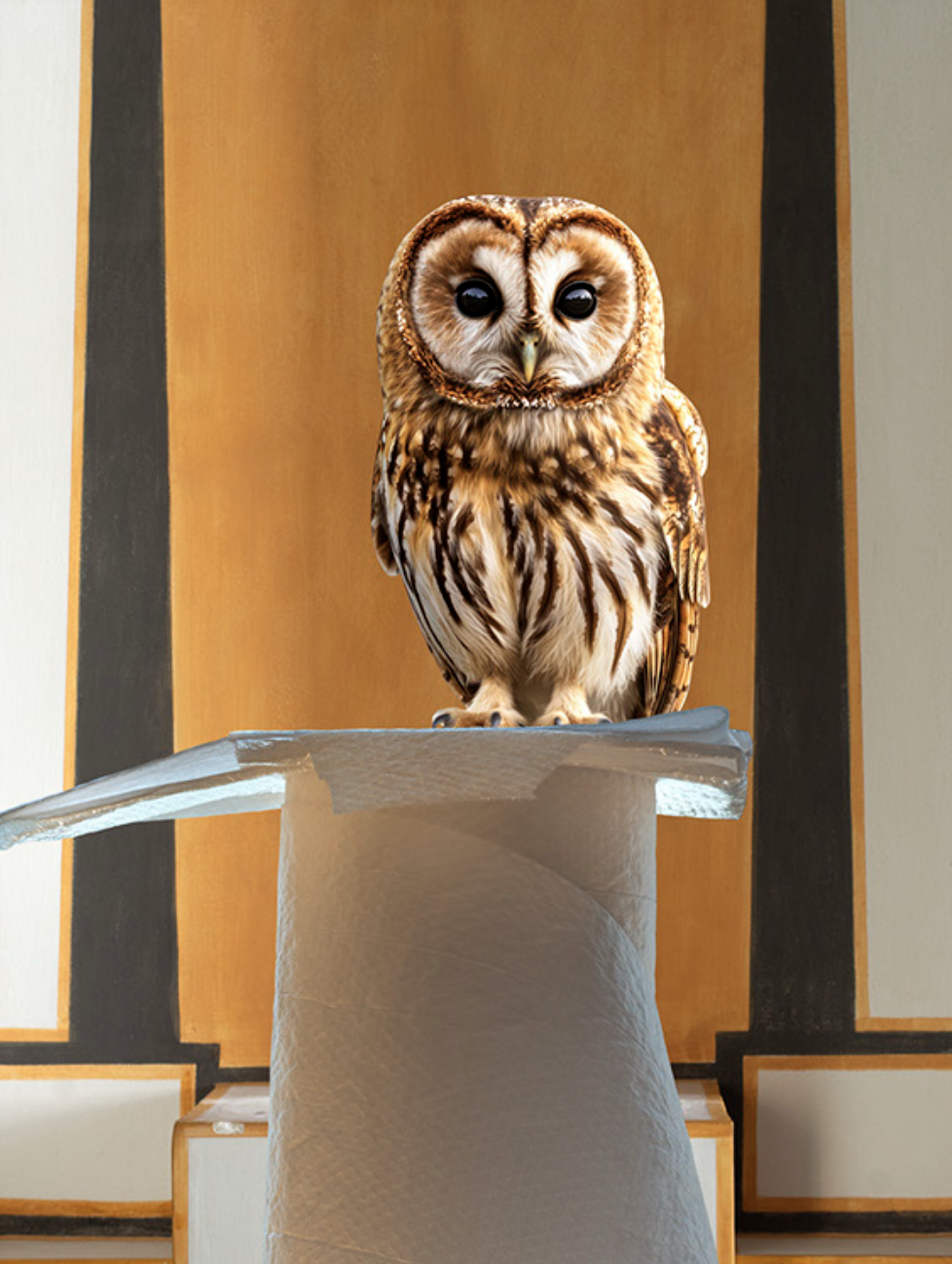
Selected works by Ilit Azoulay from our archives
Transkript of Episode 04
Hosts: Charlotte Desaga (CD) & Esenija Banan (EB)
CD: Welcome back to Art Unquoted. „I’m not interested in producing clarity. I’m interested in creating conditions where complexity can exist without being reduced.“ – this is our quote today . It is by Ilit Azoulay and it is connected to an exhibition that unsettled and inspired Esenija and me deeply. But maybe in different ways?
EB: Well, let’s see. We just visited her exhibition at Villa Stuck in Munich. The artist presented a video installation and photographic works. Azoulay is known for her investigations on how institutions construct identity and knowledge through a research-based archival practice.
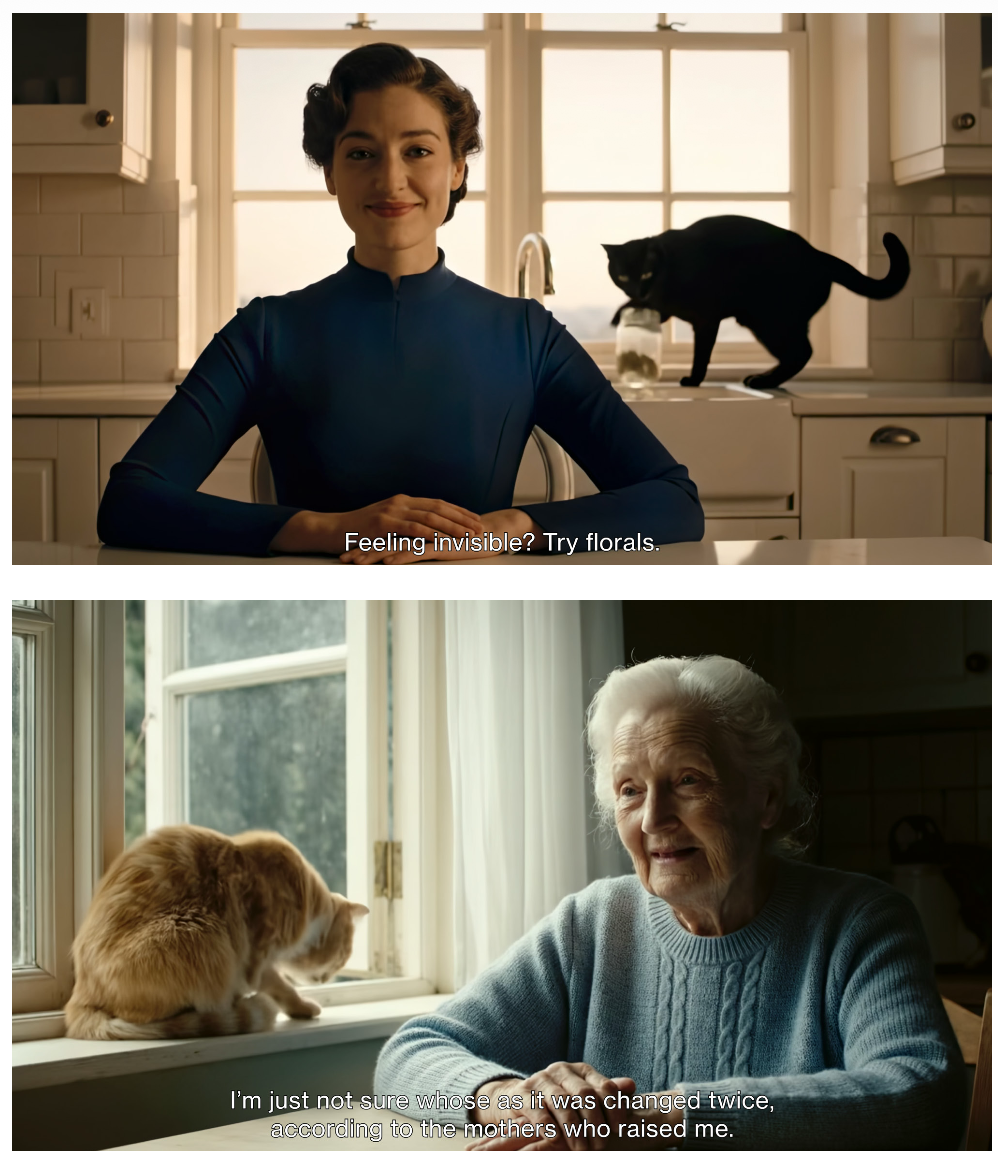
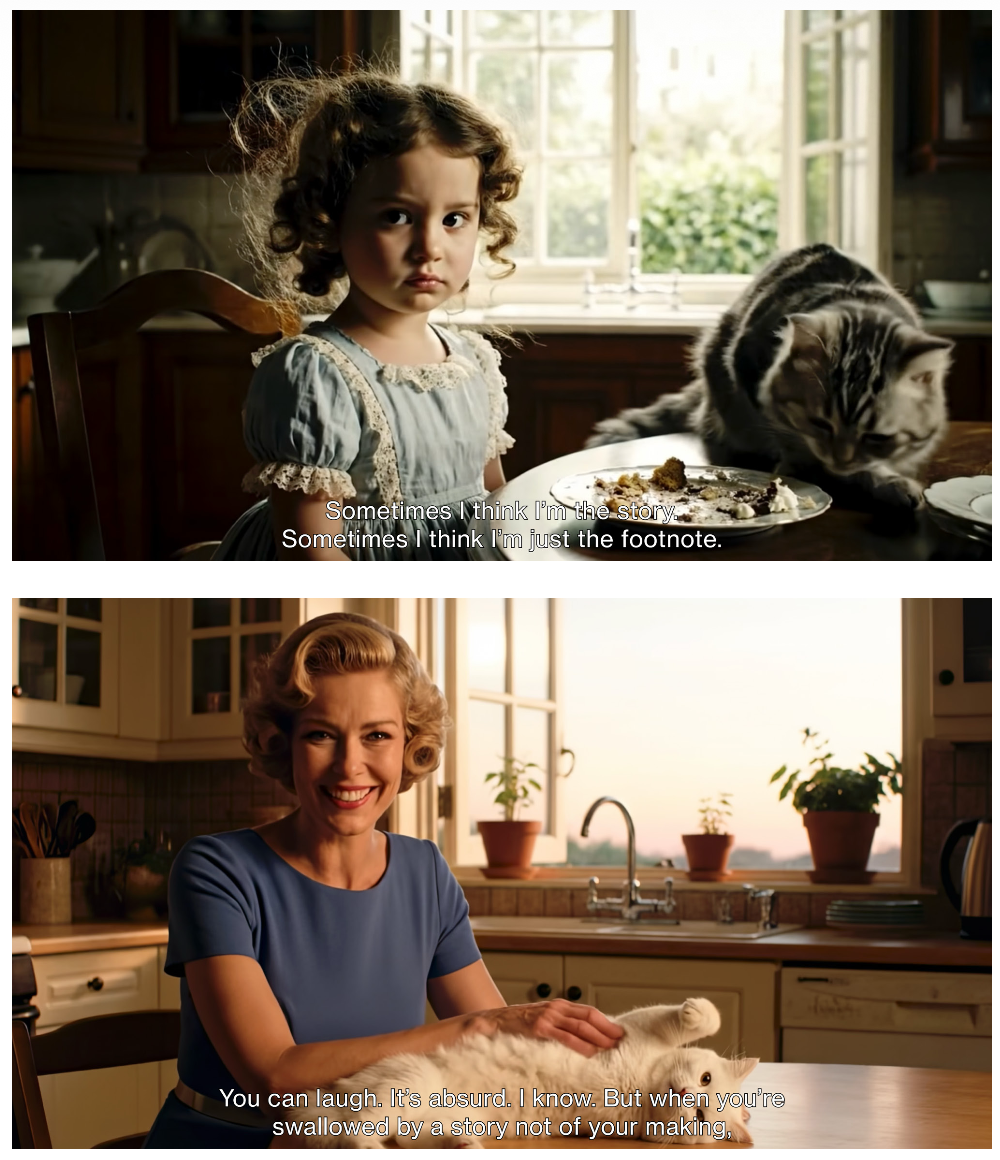
CD: And she used AI for the first time as a tool for her video piece. And in that context, I think a thought by Trevor Paglen, from his new book „How to See Like a Machine,“ might be helpful to explore this work further: He argues that AI doesn’t just represent reality – it activates it. Machines don’t just show us what’s there. They create what’s there. They generate new possibilities. New realities. And in Azoulay’s work, this is what’s happening. The 77 AI actresses aren’t just representations of Mary. They’re activations – prompts that generate new versions of her into being.
EB: Ah! Very interesting! But I’m not sure I agree with that framing. I mean, yes, AI generates images. But does that mean it’s generating reality? Or is it just generating convincing simulations? I think there’s a difference. And I’m not sure Paglen’s concept fully captures what I experienced in the exhibition.
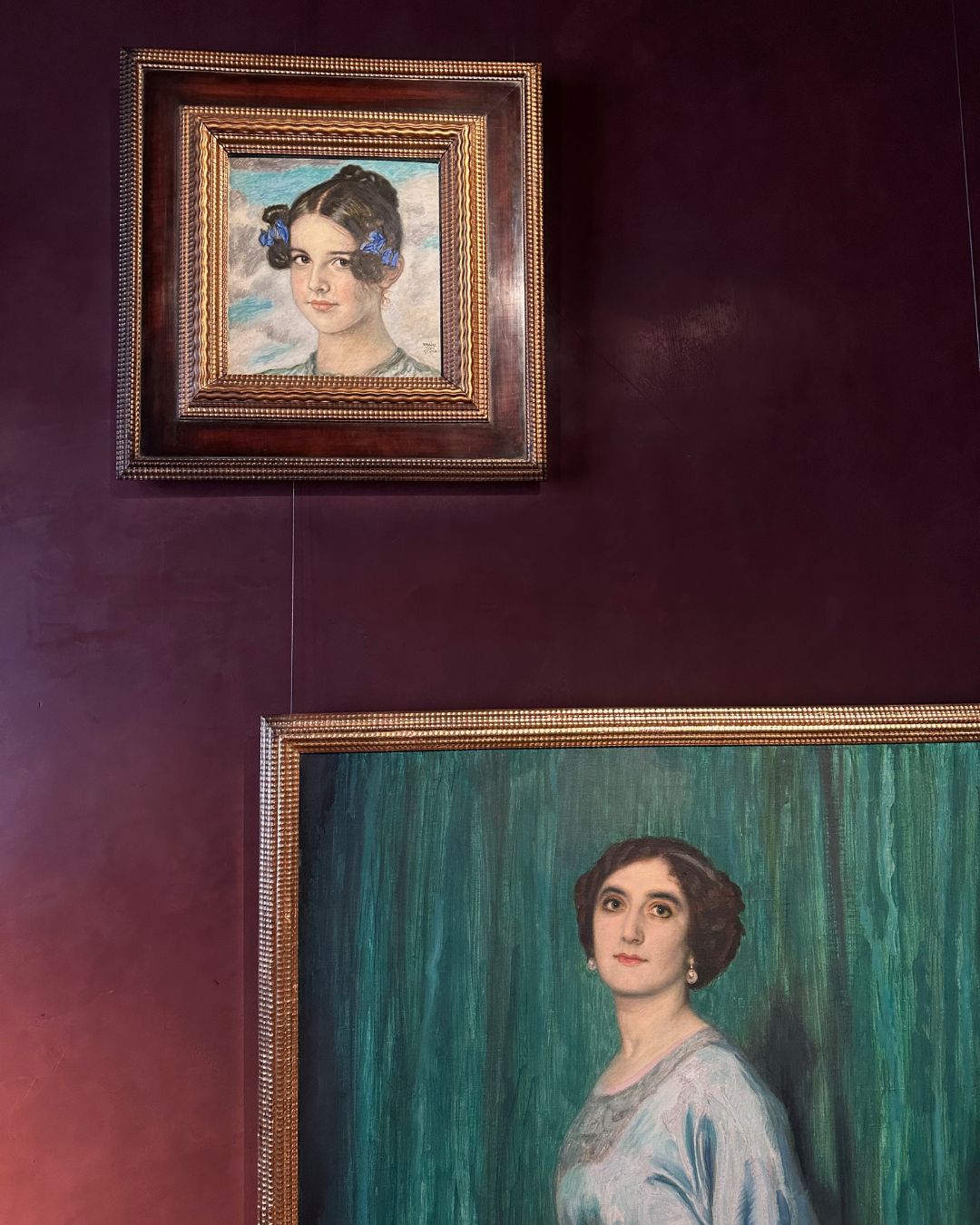
CD: Fair enough. But let’s start with context: Mary Stuck was born in 1896 . She is the center figure of Azoulay’s exhibition „No Single View.“ She was the illegitimate daughter of the well-known German painter Franz von Stuck who lived and worked in Munich in the Villa bearing his name, a beautiful neo-classical building with incredible art nouveau interiors. Today it’s a museum. In 1904, after a legal process, Mary was formally adopted by Franz and his wife. And after Franz von Stuck died, Mary returned to Villa Stuck with her own family. She lived there for decades. Until 1961. So she was there through the 20th century. She witnessed the house transform from an artist’s studio to a museum. From a private home to public space.
EB: So in a way she connects past and present. Private and public. And now Azoulay is bringing her back. Not as a memory, but as a question. And I think that’s intriguing. Yet I’m skeptical of the philosophical framing. I think the work is more about Mary as a person. Her complexity. Her fragmentation. Not about AI as „activation.“
CD: I understand and in principle agree on the latter, but there is more, especially in her conceptual approach to using AI. Azoulay’s video work comprises 77 short scenes. Each is Mary at a different age. Azoulay engaged 77 different AI-generated actresses. Each performing the character differently. This is where Paglen’s philosophical thoughts about images in the age of AI become relevant. These aren’t identical representations of Mary. They’re activations and prompts that generate new versions of her. New possibilities, maybe new truths.
EB: But that’s where I push back. I don’t think they’re generating new truths. I think they’re revealing something in pieces – something that was always true about Mary. That she was always fragmented. Multiple versions, each one constructed. The AI doesn’t create that fragmentation. It just helps to make the invisible visible.
CD: Yes and no. I think you’re right that this multiplicity has always existed. But the AI does something else. It refuses a single version of Mary. It refuses the archive, the fixed identity. And in that refusal, it generates something new. A counter-archive. A web of possibilities instead of a singular truth.
EB: Okay, I see where you are going. But I experienced something different in the room. I wasn’t thinking about archives or counter-archives. I was thinking about Mary – as a girl, as a woman, as someone whose life was complicated and painful. Standing in her bedroom. Watching these different versions of her in the video installation. And feeling… confused. Unsettled. Not because of some philosophical concept about activations. But because I was confronted with the impossibility of knowing or understanding her completely.
CD: And that’s exactly what the work does. It forces you to face that impossibility. And in that confrontation, something happens. You realize that identity isn’t fixed. That memory isn’t reliable. That truth is always layered. Before, you had to use your imagination to picture these different versions of Mary. Now you can see them – 77 different actresses, 77 different Marys. Imagination made concrete. But we’ve also lost something. The space where imagination lived. The freedom to imagine her differently, but that is probably a separate topic.
EB: I think we’re saying similar things but from different angles. You’re coming at it philosophically. I’m coming at it emotionally. And I think both are valid. The work operates on both levels.
CD: Absolutely. And on top of everything: It’s not just intellectual. It’s physical. In that exhibition you stand in Mary’s bedroom. You see an AI-Mary on the screens. But you’re also standing in the room where the real Mary slept 80 years ago. Where she lived her life. The artificial and the real are in the same space. At the same time. It’s a kind of vertigo.
EB: Yes. That vertigo is real. And I think that’s what Azoulay is after. Not clarity. Not answers. She wants to make us doubt what we think we know.
CD: And the technical limitation is brilliant. The AI can’t remember – it only holds information for eight seconds, after which it forgets, kind of. And that forgetting is the important quality in this. Mary can’t be fixed into one version of herself. She can’t be reduced to one truth. She exists only in split moments. In these artificial reconstructions.
EB: Hmm… interesting. It’s as if the technical limitations became the artistic concept. And that makes this work even more convincing. It’s not just about Mary. It encompasses all of us. We’re all constructed. We’re all fragmented. We’re all multiple versions of ourselves. And the AI makes that visible, concretely.
CD: One can probably say so! The forgetting isn’t just a metaphor for memory. It’s about how we construct ourselves. Mary exists only in the moment of viewing. You can’t see the same Mary twice. Each time you watch, you’re watching a different one. Another version of the truth. And that’s exactly what Paglen means – the AI doesn’t represent Mary. It prompts new versions of her into being.
EB: I still think there’s a difference between activation and revelation. But I understand what you’re saying. And I think the work operates on both levels. It generates and it uncovers. And that’s what makes this work strong and simultaneously so vulnerable.
CD: Yes. In that tension. In the embrace of complexity.
EB: And given all that, the work is visually and conceptually stunning.
CD: Yes, very much! And coming back to Azoulay’s quote “I’m not interested in producing clarity. I’m interested in creating conditions where complexity can exist without being reduced.“
EB: Absolutely. It came true. I couldn’t agree more to her statement.
CD: Me neither. Thank you for listening to Art Unquoted. Join us next time.
____
Source/Citation quote: Sent via WhatsApp by the artist, April 16, 2026
____
Texts by Charlotte Desaga.
Images from our private archives.