An image is a situation. Not a photograph. But a situation.
Art Unquoted Notes · A personal essay by Charlotte Desaga
What if an image only exists in the moment you look at it? Not before. Not after.
In this bonus episode, Charlotte explores two exhibitions by French artist Pierre Huyghe: UUmwelt at the Serpentine Gallery in London (2018) and his major new show at the Fondation Beyeler in Basel. At the center: a single sentence. „An image is a situation. Not a photograph. But a situation.“
Flies. Dust. Reconstructed human thoughts. And a theory by biologist Jakob von Uexküll that says: without a living subject, there is no time.
A solo episode about multiple realities, the nature of perception, and what it means to be a participant rather than an observer.
 Available on Apple Podcasts & everywhere else — or right here ↓
Selected images from the archives
Transkript Pierre Huyghe
„An image is a situation. Not a photograph. But a situation.“ That sentence by French artist Pierre Huyghe has stayed with me for years. And the more I think about it, the more it seems to unlock something essential – not just about his work, but about how we experience anything at all
Let me explain.
Why would anyone talk about an exhibition that is almost a decade old? Especially one that was visually austere, with lots of empty space, and barely anything to see?
Because this show revealed something remarkable. Something about life, consciousness, time. I think I wasn’t fully aware back then. But the ideas keep returning. And recently, I visited Pierre Huyghe’s major new exhibition at the Fondation Beyeler in Basel. Suddenly, everything I had experienced in London in 2018 came back into focus.
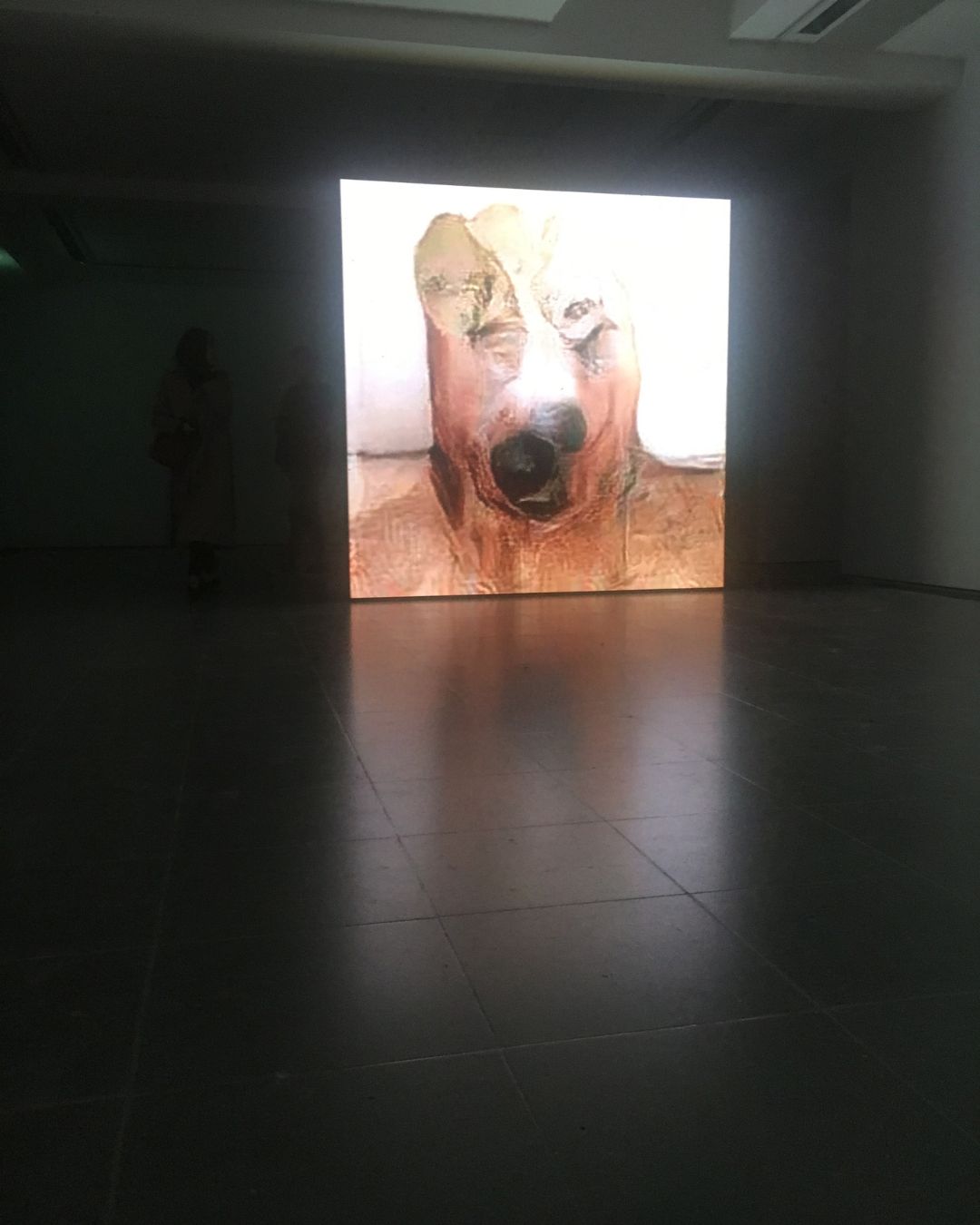
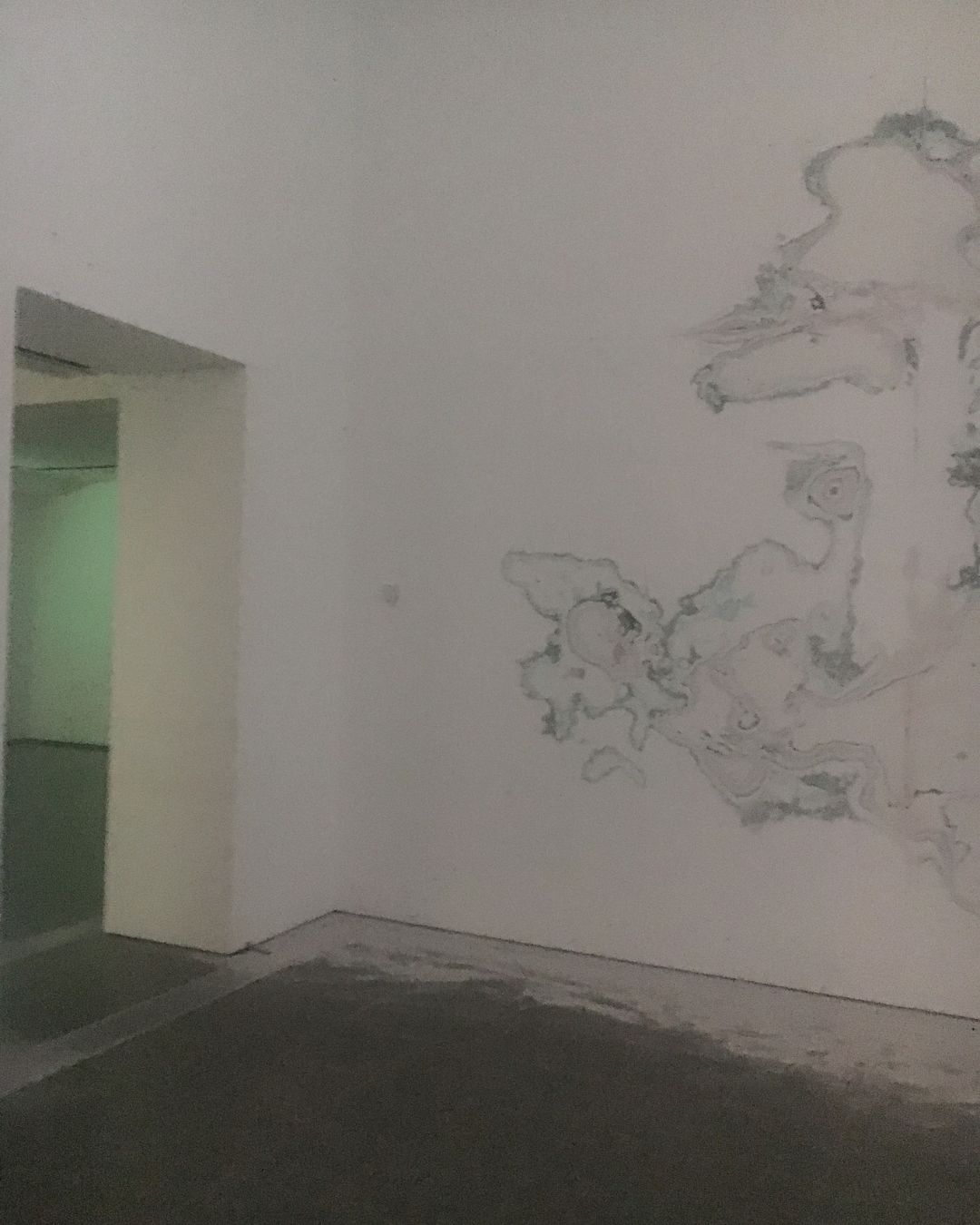
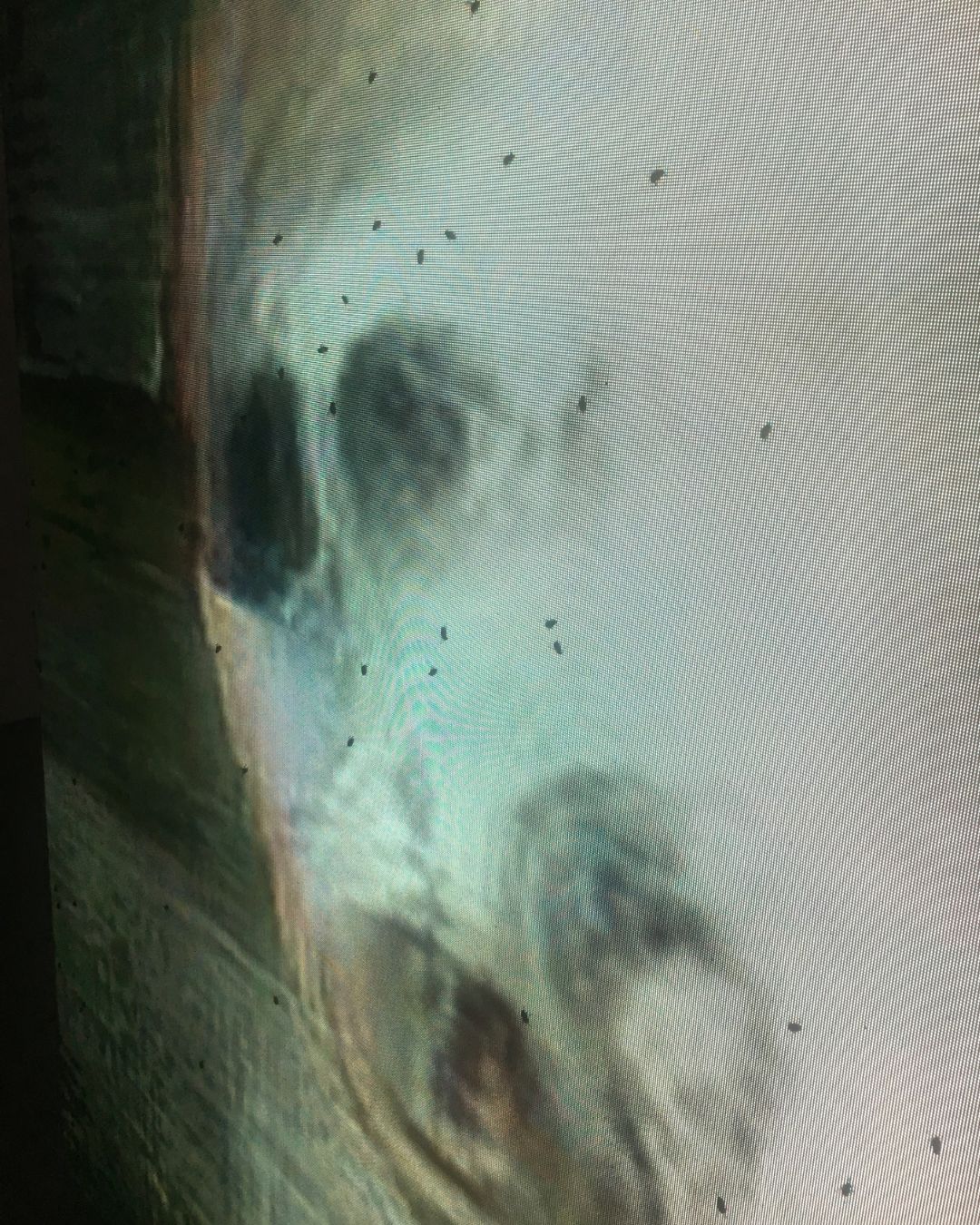
You walk into a dark gallery. No artificial lights. The air buzzes. Flies everywhere. They cluster on glowing screens, drawn to the warmth. On the walls, layers of old paint are exposed. Each layer is a trace of a previous exhibition. Time made visible. On large LED screens, images flicker. Blurry. Ghostlike. You don’t know what you’re looking at. But you can’t look away. This was UUmwelt, spelled with two capital U. Pierre Huyghe’s installation at the Serpentine Gallery in the Fall of 2018.
The gallery is minimal. Almost empty. Every small sound echoes. Every movement matters. There’s an unsettling silence. But then you notice the flies. They’re living. Freely roaming. You hear the buzz of their wings. They feed. They mate. They die. Their dead bodies accumulate on the floors. Small cycles of life and death, compressed into moments.
There is a smell. Not the typical clean exhibition space smell. But something warm. Something stagnant. One large wall is extraordinary. It’s been carefully sanded in patches. Layers of paint underneath. Each layer shows a historical trace. Like the rings in a tree trunk. The dust from the sanding remains on the floor. Visitors carry it unknowingly through the gallery. It becomes part of the evolving exhibition. And then there are the images. Five sequences on large LED screens. Quite unlike anything you’ve seen. Phantoms. As if consciousness itself is flickering on the screen. Dense shapes. Organic forms that seem mechanical. They resist categorization. Only through imaginative effort can you relate them to anything you know.
The flies are drawn to the screens. They cluster on the surfaces. As if they believe the screens are alive. But the screens show something else entirely: artificial reconstructions of human thought. Living creatures attracted to images of consciousness. Life without understanding. Thought without life. I stood there and couldn’t distinguish between the two. Somehow both seemed equally real.
What are these images? A test subject was shown images while their brain activity was recorded. An artificial neural network then attempted to reconstruct what that person had been imagining. The result: moments of consciousness, captured before they solidify into language or meaning. Unborn thoughts. Visualized by machine. Flickering. Ungraspable. Like the monolith in 2001: A Space Odyssey: an object that resists comprehension, and transforms those who encounter it.
To understand what Huyghe is doing, we need to understand the title: UUmwelt. Notice the doubled U. It’s like a stutter. It refers to a theory by the German biologist and philosopher Jakob von Uexküll.
In 1909 Uexküll developed a concept called „Umwelt“, environment, that describes the perceptual world of an organism. His thought: each living being experiences its own reality. A fly’s entire life might be just a few days. In that time, it lives a complete life. A fly’s one-minute flight is half a lifetime. For us, it’s a blink. This means: time isn’t universal. Time is created by consciousness. A fly creates its own time. Humans create their own time. A machine creates its own time.
There’s no single reality. There are many realities. Layered on top of each other. Each one equally valid to the organism experiencing it. Uexküll wrote: „Without a living subject, there can be no time.“ This isn’t a poetic metaphor. It’s a description of how reality actually works.
Now return to that sentence. „An image is a situation. Not a photograph. But a situation.“ In Huyghe’s Umwelt, the image involves the flies. The wall. The dust. The reconstructed thoughts. The viewer. The time passing. All of these together create the image. Remove the flies, and the image changes. Remove the viewer, and there is no image at all. The image is not on the screen. The image is what happens between the screen and you.
This is a radical concept. We tend to think of images as fixed things. Captured moments. Frozen in time. But the artist says: no. An image is alive. It unfolds. It depends on who is looking, and when, and under what conditions.
When you stand in this gallery, you’re not just observing. You’re participating. Your attention generates the meaning. You co-create the artwork.
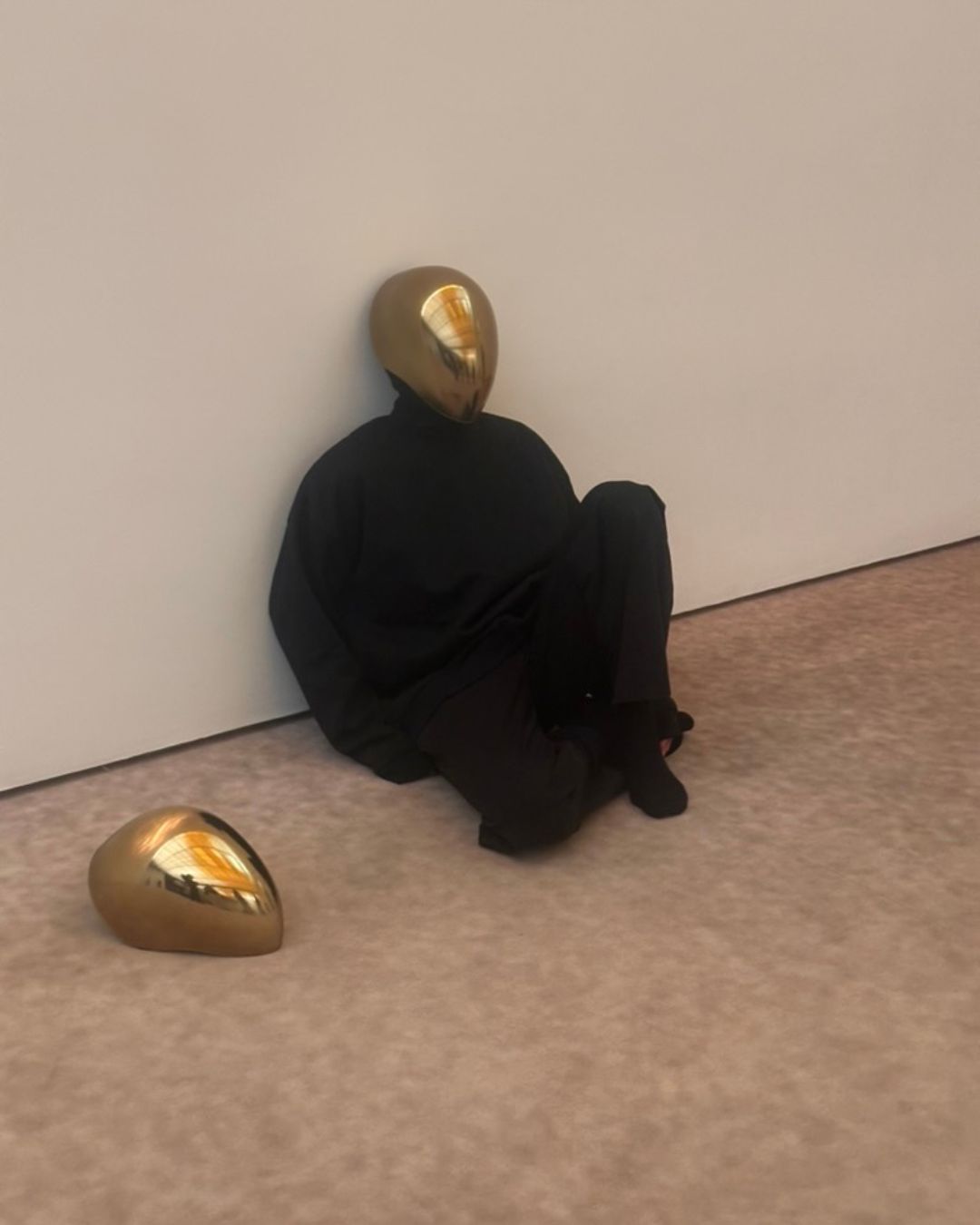
This came to my mind again when I visited the Fondation Beyeler in Basel. Huyghe has created an entirely new exhibition for this space but a very similar logic to UUmwelt runs through everything. This time ants make up the cast. In one room, ants form paths across a gallery wall. In another, a carpet records the repeated movement of visitors, tracing their paths over time. A new work called Light Dust spreads a continuous field of coloured dust and cast artificial light throughout the entire exhibition.
In another room, a piece titled Timekeeper reveals layers of wall paint from past exhibitions. The dust from the sanding is carried through the space by walking visitors, an archaeology of exhibitions, shaped by accumulation. Time made visible. Again.
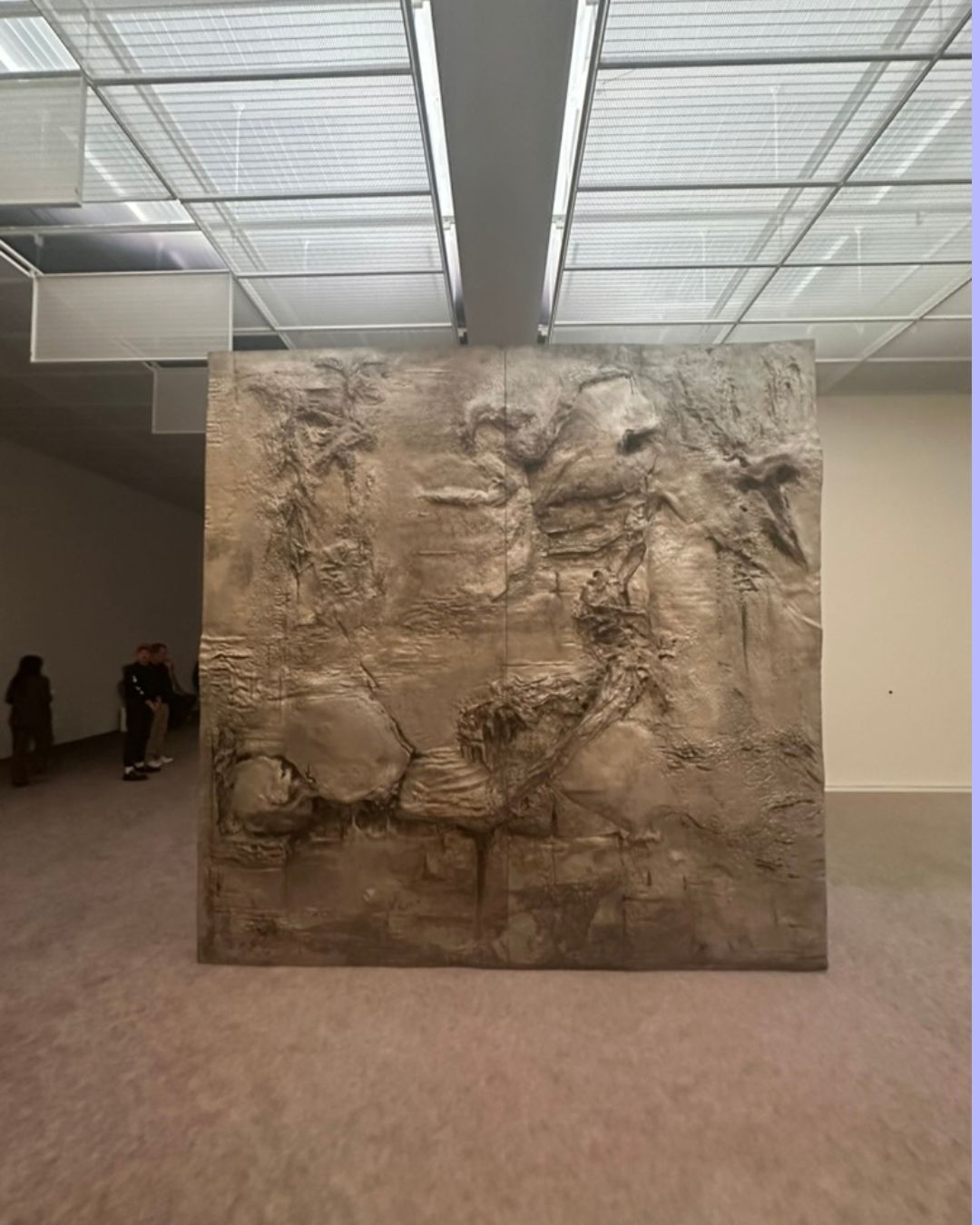
And then there is Adversary. A large, closed gate. A threshold. On its surface: a high bas-relief – not one fixed image, but one image among all possible images. It emerges from a shared process: human imagination and machine computation, together. And it shifts. Every viewer brings their own perception and the work changes with it. You don’t see the same thing twice. You don’t see what I see.
Again: an image is a situation.
The artist describes this exhibition as a „soulscape“, An inner world formed by multiple temporalities, voices and subjectivities, where contradiction and uncertainty define each experience.
That word, soulscape, suggests that what Huyghe is mapping is not the external world, but the internal one. Not what exists, but what is felt.
And this is where Uexküll returns. Each organism has its own Umwelt, its own experienced reality. Huyghe doesn’t just illustrate this idea. He builds it. He constructs environments where the biological, the geological, the artificial, and the human all collide. All present at once. All equally real. All equally incomplete.
When these worlds collide, something singular happens. We stop being observers. We become participants. Every moment of attention creates a situation. And in that situation, time is born.
An image is a situation. And a situation is something you enter. Something that changes you. Something that doesn’t exist without you.
____
Voice & text by Charlotte Desaga.
Semi-automatically translated.
Images from our private archives.